The 2026 Yoga Movement: 5 Key Poses for Mobility & Stress Relief
The 2026 Yoga Movement incorporates five vital poses, carefully updated for contemporary lifestyles, to effectively enhance mobility and significantly reduce stress.
The landscape of wellness is ever-evolving, and the 2026 yoga movement stands as a testament to this ongoing adaptation, bringing ancient practices into sharp focus for contemporary needs. This updated approach to yoga recognizes the unique demands of modern life, offering targeted solutions for enhanced mobility and profound stress reduction. As we navigate rapid technological advancements and increasing daily pressures, integrating purposeful movement and mindfulness becomes not just beneficial, but essential.
The evolution of yoga for modern lives
Yoga, a practice spanning millennia, has consistently adapted to the cultural and societal contexts in which it thrives. In 2026, this evolution continues, with a renewed emphasis on functional movement, mental resilience, and accessibility. The traditional foundations of yoga remain, but their application is being refined to address prevalent issues such as sedentary lifestyles, digital overload, and chronic stress.
Modern yoga practitioners seek more than just physical exercise; they look for a holistic approach that integrates mind, body, and spirit. This shift has led to the development of specific sequences and modifications designed to counteract the effects of prolonged sitting, screen time, and the constant barrage of information. The focus is less on extreme flexibility and more on sustainable, health-promoting movements that can be incorporated by anyone, regardless of their starting point.
Addressing contemporary challenges
- Sedentary lifestyle counteraction: Poses designed to open hips, strengthen the core, and mobilize the spine, directly combating the effects of desk jobs.
- Digital detox support: Emphasis on breathwork and mindfulness to alleviate mental fatigue and improve focus.
- Stress and anxiety reduction: Integration of restorative poses and longer holds to activate the parasympathetic nervous system.
The evolution of yoga into the 2026 movement is not about discarding tradition, but about intelligently applying its wisdom. It’s about making yoga a practical tool for daily well-being, ensuring its relevance and effectiveness for individuals seeking balance in a fast-paced world. This ensures that the practice remains a powerful ally in the pursuit of both physical vitality and mental tranquility.
Pose 1: dynamic spinal twists for improved flexibility
Dynamic spinal twists are fundamental to the 2026 yoga movement, serving as a powerful antidote to the stiffness often resulting from modern sedentary habits. These twists gently mobilize the vertebral column, releasing tension in the back and improving overall spinal health. Unlike static holds, dynamic twists involve a fluid movement coordinated with breath, enhancing circulation and promoting a sense of release throughout the torso.
Incorporating these twists into your daily routine can significantly impact your posture and ease of movement. They help to lubricate the spinal discs and strengthen the muscles supporting the spine, which are crucial for maintaining an upright and comfortable posture. The rhythmic nature of dynamic twisting also offers a meditative quality, allowing the mind to synchronize with the body’s movement and breath.
Benefits of dynamic twists
- Enhanced spinal mobility: Increases flexibility in all directions, counteracting stiffness.
- Improved digestion: Gentle compression and release of abdominal organs stimulate digestive processes.
- Stress relief: Releases tension in the back, shoulders, and neck, areas prone to holding stress.
- Better posture: Strengthens core muscles and improves awareness of spinal alignment.
To practice, begin seated or lying down, gently twisting from side to side, allowing your breath to guide the movement. Focus on lengthening the spine with each inhale before twisting deeper on the exhale. This mindful approach transforms a simple physical exercise into a deeply restorative practice, vital for modern well-being.
Pose 2: updated warrior II for core strength and balance
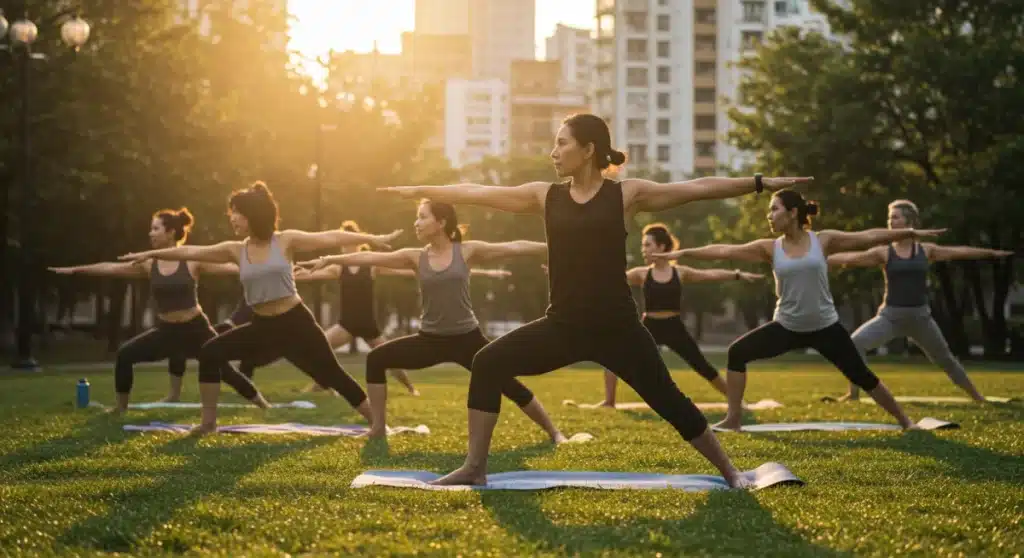
Warrior II, or Virabhadrasana II, has always been a cornerstone of yoga, but its updated rendition within the 2026 yoga movement emphasizes functional strength and unwavering balance. This pose is crucial for building a strong foundation, targeting the leg muscles, core, and shoulders, all while cultivating mental focus. The modern interpretation often includes modifications to ensure accessibility for all body types and levels, making it a truly inclusive practice.
The key to the updated warrior II lies in engaging the core deeply, ensuring stability and protecting the lower back. The stance is broad and powerful, with the front knee stacked directly over the ankle and the back foot firmly grounded. Arms extend in opposite directions, creating a sense of expansiveness and outward energy. This pose not only sculpts the body but also strengthens the mind’s ability to remain steady amidst challenges.
Refined alignment for optimal benefit
In the 2026 approach, specific attention is paid to pelvic alignment and hip engagement. Practitioners are encouraged to gently tuck the tailbone and engage the lower abdominal muscles to support the spine, preventing a common arching in the lower back. The gaze over the front fingertips helps to sharpen concentration and extend the energetic line of the pose.
Furthermore, modifications such as using a chair for support under the front thigh or shortening the stance are commonly taught, allowing individuals to build strength progressively. This adaptive methodology means that the profound benefits of warrior II – including improved stamina, better balance, and heightened confidence – are attainable for everyone, reinforcing its status as an indispensable pose for modern life.
Pose 3: restorative legs-up-the-wall for stress reduction
Viparita Karani, or Legs-Up-the-Wall, is a profoundly restorative pose that has gained significant traction in the 2026 yoga movement for its unparalleled ability to reduce stress and calm the nervous system. This simple yet powerful inversion allows the body to gently decompress, promoting relaxation and aiding in recovery from daily fatigue. It is a perfect antidote to the constant upward flow of energy and stimulation characteristic of modern living.
By elevating the legs above the heart, this pose encourages venous blood flow back towards the heart, reducing swelling in the ankles and feet. More importantly, it signals to the nervous system that it is safe to relax, shifting the body from a ‘fight or flight’ response to a ‘rest and digest’ state. This makes it an invaluable tool for managing anxiety, insomnia, and general mental exhaustion.
Cultivating deep relaxation
Practicing Legs-Up-the-Wall offers a unique opportunity for passive stretching of the hamstrings and lower back without strain. The stillness of the pose, combined with mindful breathing, creates an environment conducive to deep relaxation. Many practitioners find it beneficial to close their eyes and focus on the breath, allowing thoughts to gently drift away.
For enhanced comfort, placing a folded blanket or cushion under the hips can alleviate pressure on the lower back. Holding the pose for 10-15 minutes can significantly impact one’s state of mind, fostering a sense of peace and rejuvenation. This accessibility and effectiveness make Viparita Karani a cornerstone of stress reduction strategies within the contemporary yoga landscape, proving that sometimes, the simplest poses yield the greatest benefits.
Pose 4: pigeon pose variations for hip mobility
Pigeon Pose, or Eka Pada Rajakapotasana, in its various forms, is a critical component of the 2026 yoga movement, specifically targeting the deep release of hip tension and significantly enhancing mobility. Modern lifestyles, characterized by prolonged sitting and repetitive movements, often lead to tight hips, which can impact everything from lower back health to gait. Pigeon Pose directly addresses these issues, offering profound relief and increased range of motion.
The pose works by externally rotating one hip while simultaneously stretching the hip flexors of the opposite leg. This dual action is incredibly effective for unlocking stiffness and improving flexibility in an area that holds a great deal of physical and emotional tension. The variations ensure that practitioners can access the benefits safely and effectively, regardless of their current hip flexibility.
Exploring accessible modifications
- Supported pigeon: Using props like blankets or blocks under the hip of the bent leg to reduce intensity and provide support.
- Figure-four stretch: A gentler supine variation that offers similar benefits without putting pressure on the knee.
- Seated pigeon: Practicing the pose from a seated position, making it accessible for those with knee sensitivities or limited mobility.
Each variation allows for a gradual and mindful exploration of hip opening, preventing strain and encouraging deep release. Holding Pigeon Pose for several minutes, with conscious breathing, can not only improve physical mobility but also release stored emotional stress. This makes it an indispensable pose for anyone seeking to improve their overall physical comfort and emotional well-being in 2026 and beyond.
Pose 5: mindful savasana for ultimate mental calm
Savasana, or Corpse Pose, often mistakenly seen as merely resting, is redefined in the 2026 yoga movement as a profound practice for achieving ultimate mental calm and integrating the benefits of the entire yoga session. Far from being passive, mindful Savasana is an active state of conscious relaxation, essential for stress reduction and cultivating inner peace in an overstimulated world. It is the crucial final step that allows the body and mind to absorb and process the work done during practice.
In the modern context, where constant stimulation is the norm, dedicating time to complete stillness and quiet introspection is revolutionary. Mindful Savasana encourages practitioners to release all physical effort, surrender to gravity, and observe their thoughts without judgment. This practice is vital for resetting the nervous system, reducing cortisol levels, and improving overall mental clarity.
The art of conscious relaxation
To deepen the experience of Savasana, attention is often drawn to the breath, allowing it to become naturally soft and unforced. Body scans, where awareness is systematically brought to different parts of the body, can help release any lingering tension. The goal is not to fall asleep, but to remain in a state of relaxed awareness, hovering between wakefulness and slumber.
The profound mental calm achieved through mindful Savasana extends beyond the yoga mat, enhancing one’s ability to manage daily stressors and maintain emotional equilibrium. It teaches the invaluable skill of letting go, fostering a sense of peace and integration that is increasingly important for navigating the complexities of modern life. This makes Savasana not just a conclusion to practice, but a powerful practice in itself.
Integrating 2026 yoga into daily life
Integrating the principles and poses of the 2026 yoga movement into daily life is key to unlocking its full potential for enhanced mobility and stress reduction. This isn’t about dedicating hours to formal practice, but rather about weaving mindful movement and conscious breathing into the fabric of your everyday routine. Small, consistent efforts can yield significant long-term benefits, transforming your physical and mental well-being incrementally.
Consider starting your day with a few dynamic spinal twists to awaken your body, or taking a few minutes during a work break to practice a modified Warrior II for an energy boost. Even a short Legs-Up-the-Wall practice before bed can dramatically improve sleep quality and reduce evening anxiety. The adaptability of these updated poses makes them perfect for busy schedules.
Practical tips for consistent practice
- Schedule short sessions: Even 10-15 minutes of focused practice daily can make a difference.
- Use digital reminders: Set alarms to prompt you for a quick pose or breathing exercise.
- Create a dedicated space: A small, clear area in your home can serve as your personal yoga sanctuary.
- Listen to your body: Modify poses as needed, prioritizing comfort and safety over performance.
The true power of the 2026 yoga movement lies in its ability to meet you where you are, offering practices that are both effective and accessible. By consciously choosing to integrate these mindful movements and moments of stillness, you empower yourself to navigate modern challenges with greater ease, resilience, and a profound sense of inner calm. This integration fosters a sustainable path to holistic health and well-being.
| Key Pose | Primary Benefit |
|---|---|
| Dynamic Spinal Twists | Improved spinal flexibility and tension release. |
| Updated Warrior II | Enhanced core strength and balance. |
| Restorative Legs-Up-the-Wall | Profound stress reduction and nervous system calm. |
| Pigeon Pose Variations | Significant hip mobility improvement and tension release. |
Frequently asked questions about 2026 yoga
The 2026 yoga movement focuses on adapting ancient practices to modern challenges like sedentary lifestyles and digital stress. It emphasizes functional mobility, mental resilience, and accessibility, offering modifications to suit diverse body types and experience levels, making it highly relevant for contemporary well-being.
Absolutely. Poses like dynamic spinal twists and pigeon pose variations are specifically chosen for their effectiveness in releasing tension and increasing range of motion in key areas like the spine and hips. Consistent practice of these poses can significantly improve overall body flexibility and ease of movement.
Poses like restorative legs-up-the-wall and mindful savasana activate the parasympathetic nervous system, promoting a ‘rest and digest’ state. This helps to lower cortisol levels, quiet the mind, and release physical tension often associated with stress, fostering deep relaxation and mental calm.
Yes, the 2026 yoga movement prioritizes accessibility. Each key pose comes with various modifications and supports, such as using props or alternative versions, allowing individuals of all experience levels and physical conditions to safely and effectively participate and benefit from the practice.
Consistency is more important than duration. Practicing these 5 key poses for even 10-15 minutes daily can yield noticeable improvements in mobility and stress levels. Integrating them into your routine, even in short bursts, will contribute significantly to your overall well-being over time.
Conclusion
The 2026 yoga movement represents a thoughtful and essential adaptation of ancient wisdom to the demands of contemporary life. By focusing on these five key poses—dynamic spinal twists, updated Warrior II, restorative Legs-Up-the-Wall, Pigeon Pose variations, and mindful Savasana—practitioners can effectively enhance their mobility, build foundational strength, and achieve profound stress reduction. This approach not only makes yoga more accessible but also ensures its continued relevance as a powerful tool for holistic well-being in an ever-evolving world. Embracing this modern yoga movement offers a sustainable path to greater physical comfort, mental clarity, and inner peace.