Beyond Deep Breathing: Advanced Relaxation for 2026 Stress
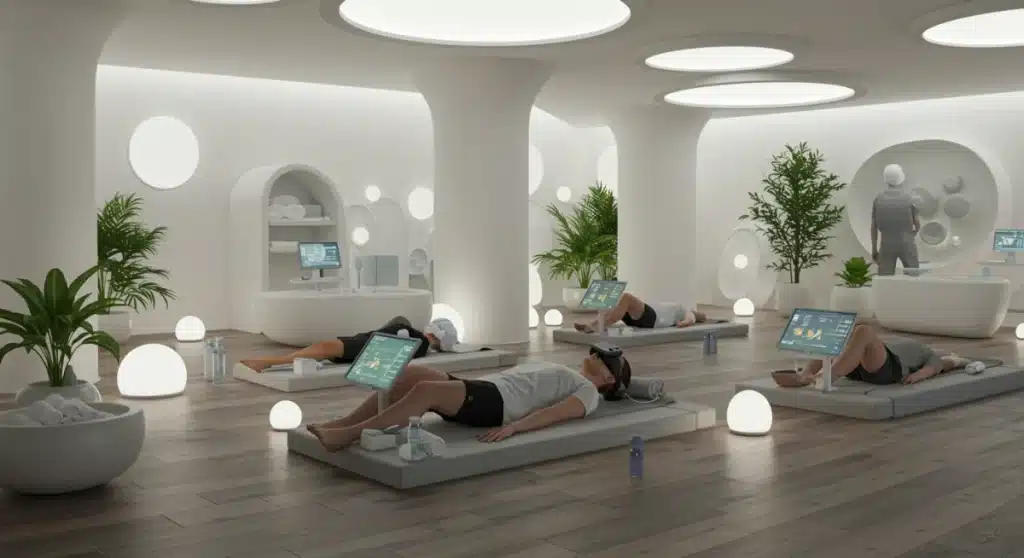
Five advanced relaxation techniques for 2026, moving beyond traditional deep breathing, offer innovative and effective strategies to combat chronic stress and enhance mental well-being in an increasingly demanding world.
In our increasingly fast-paced world, the demands on our mental and physical well-being continue to escalate. While deep breathing has long been a foundational tool, the landscape of stress management is evolving. This article delves into advanced relaxation techniques 2026, offering insider knowledge on five sophisticated methods designed to combat chronic stress more effectively than ever before, moving far beyond the basics.
neurofeedback training for cognitive calm
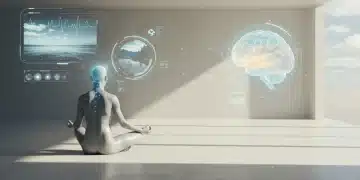
Neurofeedback training, a sophisticated form of biofeedback, is gaining significant traction as a powerful tool for stress reduction and cognitive enhancement. This technique involves monitoring brainwave activity in real-time and providing feedback to the individual, allowing them to learn how to self-regulate their brain states. By consciously altering specific brainwave patterns, individuals can cultivate states of deep calm and enhanced focus, directly addressing the physiological roots of chronic stress.
The core principle behind neurofeedback is operant conditioning. When your brain produces desired brainwave patterns, often associated with relaxation or focus, the system provides a positive reward, such as a visual or auditory cue. Over time, your brain learns to naturally produce these beneficial patterns, leading to lasting changes in your stress response and overall cognitive function. This isn’t just about temporary relief; it’s about re-training your brain for sustained well-being.
understanding brainwave patterns
- Alpha Waves: Associated with relaxed, yet alert states, often linked to meditation and creativity.
- Theta Waves: Linked to deep relaxation, daydreaming, and access to subconscious information.
- Delta Waves: Predominant during deep, restorative sleep.
- Beta Waves: Active during focused attention, problem-solving, and alertness, but can also be elevated during stress.
Neurofeedback protocols are highly individualized, tailored to target the specific brainwave imbalances contributing to an individual’s stress or anxiety. A trained professional will conduct an initial assessment, often involving a quantitative electroencephalogram (QEEG), to map your brainwave activity and identify areas for intervention. This personalized approach ensures that the training is maximally effective for your unique neurological profile.
The benefits extend beyond mere relaxation. Many users report improved sleep quality, reduced anxiety, enhanced emotional regulation, and even better cognitive performance. As technology advances, neurofeedback devices are becoming more accessible and user-friendly, making this advanced technique a viable option for a wider audience seeking profound stress relief and mental clarity.
bio-rhythmic coherence: synchronizing mind and body
Bio-rhythmic coherence is an advanced technique that focuses on achieving optimal synchronization between various physiological rhythms, primarily heart rate variability (HRV), breathing, and brainwave activity. Unlike simple deep breathing, which primarily targets respiration, coherence training aims for a harmonious state where these systems operate in unison, leading to a profound sense of physiological and psychological balance. This synchronized state is scientifically linked to enhanced emotional regulation, reduced stress, and increased resilience.
The practice typically involves guided breathing exercises combined with real-time biofeedback from HRV monitors. As you breathe at a specific, slow pace (often around 5-6 breaths per minute), the goal is to create a smooth, sine-wave-like pattern in your heart rate. This coherent state optimizes the functioning of the autonomic nervous system, shifting it from a sympathetic (fight-or-flight) dominance to a parasympathetic (rest-and-digest) activation. The result is a calm yet alert state, ideal for managing modern stressors.
the science behind hrv coherence
- Autonomic Nervous System Balance: Coherence training strengthens the vagal tone, improving the body’s ability to recover from stress.
- Emotional Regulation: A coherent state is associated with improved prefrontal cortex activity, enhancing emotional control.
- Physiological Efficiency: Synchronized rhythms optimize oxygen delivery and nutrient distribution throughout the body.
Integrating bio-rhythmic coherence into a daily routine can significantly impact stress levels. Short, consistent sessions can train the body and mind to return to a balanced state more quickly and efficiently. Wearable technology in 2026 is making HRV monitoring more sophisticated and seamlessly integrated, allowing individuals to track their progress and refine their practice with precision. This personalized data empowers users to observe the direct impact of their relaxation efforts.
By actively cultivating this state of internal harmony, individuals can build a stronger defense against the physiological cascade of chronic stress. It’s not just about reacting to stress but proactively building a resilient physiological foundation that supports overall well-being and mental fortitude.
immersive virtual reality (vr) for mindful escapes
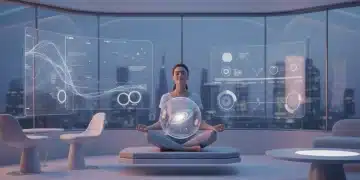
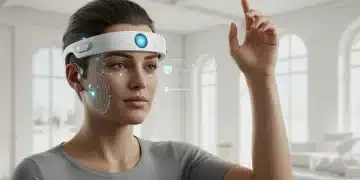
Immersive virtual reality (VR) is emerging as a groundbreaking tool for advanced relaxation, offering a unique avenue for mindful escapes that transcend physical limitations. Beyond simple guided meditations, VR platforms in 2026 are creating highly realistic, interactive environments designed to induce states of deep calm, reduce anxiety, and promote mental restoration. These experiences leverage sensory immersion to transport users to serene landscapes, futuristic zen gardens, or even abstract realms of pure tranquility, effectively disengaging the mind from everyday stressors.
The power of VR for relaxation lies in its ability to completely engross the user, blocking out external distractions and creating a powerful sense of presence. This deep immersion facilitates a state akin to meditation, where the mind can quiet down and focus solely on the virtual environment. Advanced haptic feedback and spatial audio further enhance the realism, making the experience incredibly potent for stress reduction.
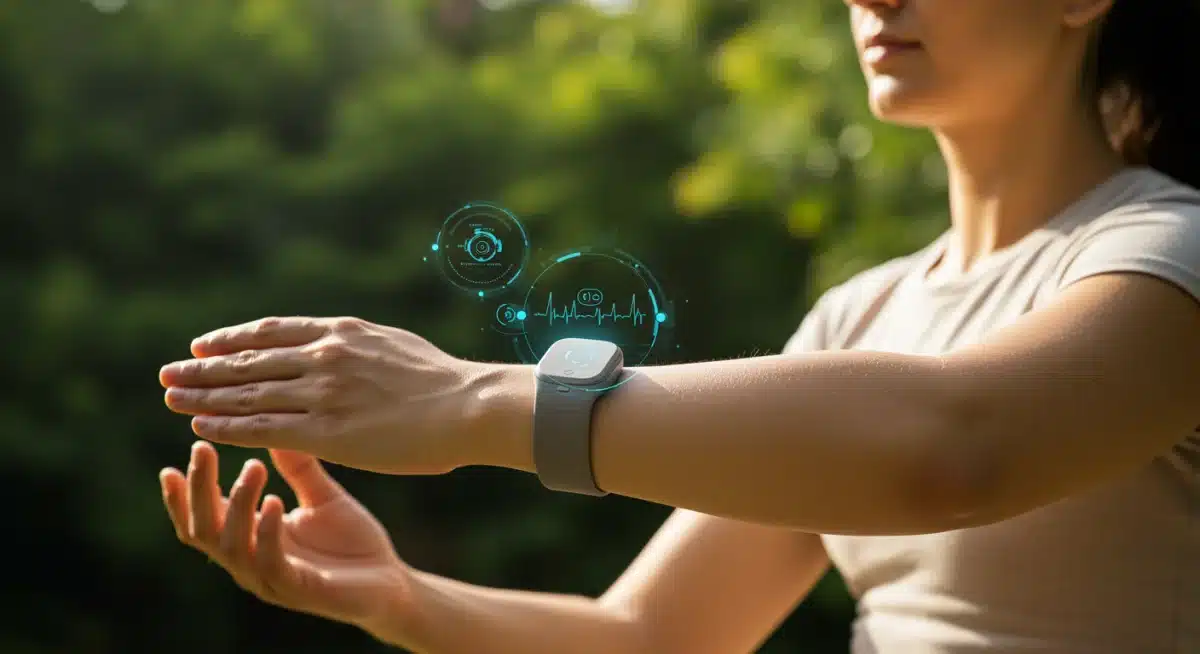
Imagine stepping into a pristine, untouched forest with the sounds of rustling leaves and distant birdsong, or floating through a cosmic nebula, all from the comfort of your living room. These curated VR environments are not just visually appealing; they are psychologically engineered to evoke feelings of safety, wonder, and peace, providing a much-needed mental break from the pressures of modern life. The combination of visual, auditory, and sometimes even tactile stimuli creates a holistic relaxation experience.
benefits of vr mindful escapes
- Enhanced Disengagement: VR’s immersive nature effectively blocks out external stressors and distractions.
- Personalized Environments: Users can choose or even customize virtual spaces that resonate most with their relaxation preferences.
- Accessibility: Provides access to restorative environments regardless of physical location or mobility.
As VR technology becomes more sophisticated and affordable, its potential as an advanced relaxation technique will only grow. Therapists are beginning to integrate VR into stress management programs, recognizing its unique capacity to create profound shifts in mental state. For individuals seeking an escape that goes beyond traditional methods, immersive VR offers an exciting and effective pathway to deep relaxation.
somatic experiencing for trauma-informed stress release
Somatic experiencing (SE) is a body-oriented therapeutic approach designed to heal trauma and other stress-related issues. Unlike purely cognitive therapies, SE focuses on the physiological responses to stress and trauma stored in the body. It operates on the premise that when individuals experience overwhelming events, their natural fight, flight, or freeze responses may become incomplete, leading to chronic dysregulation of the nervous system. This manifests as persistent stress, anxiety, and various physical symptoms. SE helps individuals gently release this stored energy, allowing the nervous system to return to a state of balance and self-regulation.
The practice involves tracking bodily sensations (sensations, emotions, movements, images, meanings, and patterns) in a safe and contained manner. A trained SE practitioner guides individuals to become aware of these subtle sensations without becoming overwhelmed. The process, often referred to as ‘titration,’ involves working in small, manageable doses, allowing the body to gradually discharge trapped energy and complete the natural self-regulatory cycles that were interrupted during a stressful event. This gentle approach prevents re-traumatization and fosters a sense of empowerment.
key principles of somatic experiencing
- Pendulation: Gently moving between states of activation and calm to build tolerance and capacity.
- Titration: Processing small, manageable amounts of sensation or emotion to avoid overwhelming the system.
- Resourcing: Identifying and strengthening internal and external resources that promote safety and well-being.
Somatic experiencing is particularly effective for those whose chronic stress is rooted in past traumatic experiences, even those that may seem minor. It offers a pathway to release the physiological imprint of stress, rather than just managing its symptoms. By addressing the body’s innate capacity for self-healing, SE helps individuals develop a greater sense of bodily awareness, resilience, and a more regulated nervous system. This leads to a more profound and lasting sense of relaxation and peace, moving beyond surface-level stress reduction to address its deeper origins.
cold exposure therapy: harnessing the body’s resilience
Cold exposure therapy, a practice that involves intentionally exposing the body to cold temperatures, is gaining recognition as a potent method for enhancing stress resilience and promoting advanced relaxation. While initially counterintuitive, controlled exposure to cold, through practices like cold showers, ice baths, or cryotherapy, triggers a cascade of physiological responses that can significantly improve the body’s ability to cope with both physical and psychological stressors. This isn’t about enduring discomfort; it’s about strategically leveraging the body’s adaptive mechanisms to build internal strength.
When exposed to cold, the body activates its sympathetic nervous system, leading to a temporary stress response. However, with regular, controlled exposure, the body adapts, and the parasympathetic (rest and digest) system becomes more efficient at returning the body to a state of calm. This ‘stress inoculation’ trains the nervous system to be more resilient, reducing the intensity and duration of stress responses in everyday situations. This enhanced regulation contributes to a deeper, more sustained state of relaxation and mental clarity.
physiological benefits of cold exposure
- Reduced Inflammation: Cold therapy can help lower systemic inflammation, a contributor to chronic stress.
- Improved Circulation: Vasoconstriction and vasodilation enhance blood flow and oxygen delivery.
- Endorphin Release: Cold exposure stimulates the release of endorphins, promoting feelings of well-being and reducing pain.
- Enhanced Vagal Tone: Regular cold exposure strengthens the vagus nerve, improving heart rate variability and stress response.
Beyond the immediate physiological benefits, cold exposure therapy also builds mental fortitude and discipline. The act of consciously stepping into discomfort and remaining calm can translate into a greater capacity to handle life’s challenges. Incorporating cold exposure, even a short cold shower, into a daily routine can be a powerful way to train both mind and body for resilience, ultimately fostering a more profound and enduring sense of calm and well-being. It’s a proactive approach to stress management that empowers individuals to strengthen their internal resources.
integrating advanced techniques for holistic well-being
The journey to profound stress management in 2026 involves more than just isolated techniques; it’s about strategically integrating advanced methods for holistic well-being. Each of the techniques discussed – neurofeedback training, bio-rhythmic coherence, immersive VR for mindful escapes, somatic experiencing, and cold exposure therapy – offers unique pathways to reduce chronic stress. However, their true power often lies in their synergistic application, creating a comprehensive approach that addresses stress from multiple angles: neurological, physiological, psychological, and emotional.
Consider combining the brain-training benefits of neurofeedback with the physiological synchronization achieved through bio-rhythmic coherence. While neurofeedback fine-tunes your brainwave patterns for calm, coherence training optimizes your heart-brain connection, leading to a more stable and resilient nervous system. Add to this the occasional immersive VR session for a mental reset, providing a powerful psychological break from daily pressures. This multi-faceted strategy ensures that you are not just managing symptoms but actively rebuilding your capacity for calm and resilience.
designing your personalized stress protocol
- Assess Your Needs: Identify the primary sources and manifestations of your stress.
- Start Gradually: Introduce new techniques one at a time to observe their effects.
- Consistency is Key: Regular practice, even short sessions, yields significant long-term benefits.
- Seek Professional Guidance: For complex issues or specific techniques like neurofeedback or somatic experiencing, consult with trained practitioners.
For those dealing with deeper, trauma-informed stress, somatic experiencing provides a crucial therapeutic component, gently releasing stored tension from the body. This can be complemented by the resilience-building effects of cold exposure, which trains the body to adapt to stress more effectively. The future of stress management is not about a one-size-fits-all solution, but about crafting a personalized protocol that leverages the most effective and advanced tools available. By thoughtfully integrating these techniques, individuals can achieve a level of well-being and resilience that moves far beyond basic relaxation, empowering them to thrive in complex environments.
| Technique | Brief Description |
|---|---|
| Neurofeedback Training | Self-regulate brainwaves for improved calm and focus. |
| Bio-Rhythmic Coherence | Synchronize heart rate, breathing, and brain for balance. |
| Immersive VR Mindful Escapes | Virtual reality environments for deep mental breaks and tranquility. |
| Somatic Experiencing | Body-oriented therapy to release stored trauma and stress. |
Frequently Asked Questions about Advanced Relaxation
While deep breathing offers foundational calm, advanced techniques like neurofeedback or bio-rhythmic coherence target specific physiological systems (brainwaves, HRV) for deeper, lasting regulation. They often involve technology or specialized therapeutic approaches to create profound, sustained shifts in stress response, moving beyond simple respiratory control.
Neurofeedback is generally safe, but suitability varies by individual needs and conditions. An initial QEEG assessment by a qualified practitioner is crucial to determine if it’s the right approach for you. It’s often effective for a range of stress-related issues, but professional guidance ensures personalized and safe application.
Immersive VR offers a powerful, engaging form of relaxation and mindfulness, providing unique environments for mental escape. While it can complement or enhance meditation practices, it doesn’t necessarily replace traditional meditation, which often emphasizes internal focus without external stimuli. Both can be valuable tools in a holistic stress management strategy.
While beneficial, cold exposure should be approached cautiously. Risks include hypothermia, frostbite, and cardiovascular strain, especially for individuals with pre-existing health conditions. It’s essential to start gradually, listen to your body, and consult a healthcare professional before beginning, particularly if you have underlying medical concerns.
The timeline for results varies greatly depending on the technique, individual consistency, and the severity of stress. Some techniques like VR can offer immediate relief, while others like neurofeedback or somatic experiencing require consistent practice over weeks or months for lasting changes. Patience and dedication are key for optimal outcomes.
Conclusion
As we navigate the complexities of 2026, relying solely on traditional stress management techniques may no longer suffice. The advanced relaxation techniques discussed, from neurofeedback and bio-rhythmic coherence to immersive VR, somatic experiencing, and cold exposure therapy, represent the cutting edge of stress reduction. By embracing these innovative methods, individuals can move beyond superficial calm to achieve profound, lasting resilience and well-being, transforming their relationship with stress in a meaningful and sustainable way. The future of calm is here, offering sophisticated pathways to a more balanced and centered life.