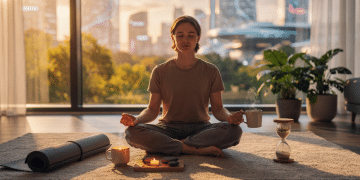
Finding Stillness: 10-Minute Daily Practices for a Calm 2026
In the relentless current of modern life, where notifications ping, deadlines loom, and responsibilities pile up, the concept of ‘stillness’ often feels like a luxurious myth, rather than an attainable reality. Yet, the profound benefits of integrating moments of calm into our daily routine are undeniable. As we step into 2026, the need to proactively cultivate inner peace and mental clarity becomes more critical than ever. This comprehensive guide will delve into effective daily stillness practices that can be seamlessly incorporated into even the busiest of schedules, requiring just 10 minutes of your day.
The misconception that achieving stillness demands hours of silent meditation or a complete overhaul of one’s lifestyle often deters individuals from even attempting it. However, true stillness isn’t about escaping the world; it’s about finding a sanctuary within yourself, a calm eye in the storm. It’s about consciously choosing to pause, breathe, and reconnect with your inner self, even if only for a few precious minutes. These brief, intentional pauses can act as powerful anchors, grounding you amidst life’s turbulence and fostering a greater sense of well-being.
Our goal with this article is to empower you with practical, accessible, and impactful daily stillness practices that don’t demand major time commitments. We’ll explore a variety of techniques, from breathwork to mindful movement, sensory awareness, and digital detoxing, all designed to fit into a 10-minute window. By the end, you’ll have a toolkit of strategies to help you not just survive, but thrive, in the bustling landscape of 2026, creating pockets of peace that ripple throughout your entire day.
The Modern Predicament: Why Stillness Matters More Than Ever
Before diving into the practices, let’s understand why prioritizing stillness is no longer a luxury but a necessity. The digital age, while offering unparalleled connectivity and convenience, has also ushered in an era of constant stimulation and information overload. Our brains are perpetually ‘on,’ processing data, responding to alerts, and juggling multiple tasks. This sustained level of cognitive activity leads to chronic stress, anxiety, decreased attention spans, and a general feeling of being overwhelmed.
Studies consistently show that even short periods of mindful stillness can significantly reduce cortisol levels (the stress hormone), improve emotional regulation, enhance cognitive function, and boost overall mood. It’s a fundamental aspect of mental hygiene, much like physical exercise is for bodily health. Neglecting these moments of pause is akin to running a marathon without ever resting – eventually, burnout is inevitable.
For 2026, consider stillness not as a break from your productivity, but as a vital component of it. By integrating these daily stillness practices, you’ll find yourself more focused, more creative, and more resilient in the face of challenges. It’s an investment in your mental capital, yielding returns in every facet of your life.
1. The Power of Mindful Breathing: Your 10-Minute Breath Anchor
One of the most accessible and immediate daily stillness practices is mindful breathing. Your breath is always with you, a constant, reliable anchor to the present moment. You don’t need any special equipment or location; just your breath and 10 minutes.
How to Practice 10-Minute Mindful Breathing:
- Find a Quiet Spot (Optional but Recommended): Sit comfortably in a chair or on the floor, with your spine erect but relaxed. You can close your eyes or keep them softly gazing downwards.
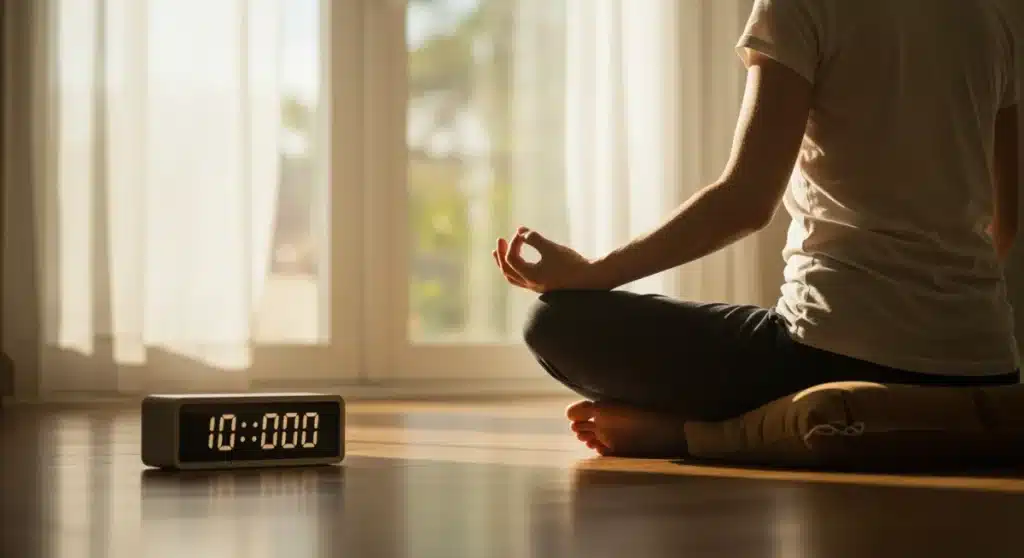
- Set a Timer: Set a timer for 10 minutes. This helps you release the need to constantly check the time and allows you to fully immerse yourself in the practice.
- Focus on Your Breath: Bring your attention to the sensation of your breath entering and leaving your body. Notice the rise and fall of your abdomen, the air flowing through your nostrils, or the subtle sensations in your chest.
- Observe Without Judgment: Your mind will wander. This is normal. When you notice your thoughts drifting, gently acknowledge them without judgment, and then guide your attention back to your breath. Treat your thoughts like clouds passing in the sky.
- Deepen Your Breath (Optional): After a few minutes, you might choose to gently deepen your breaths, inhaling slowly through your nose, feeling your belly expand, and exhaling slowly through your mouth, releasing tension.
This practice helps to calm your nervous system, reduce mental chatter, and bring you into the present. It’s a foundational element of many daily stillness practices and can be done anywhere, anytime a moment of calm is needed.
2. Sensory Immersion: Engaging Your Senses for Stillness
Our senses are powerful gateways to the present moment. By intentionally focusing on one or more senses, we can pull ourselves away from distracting thoughts and into the immediate experience. This is another excellent 10-minute technique for cultivating stillness.
How to Practice 10-Minute Sensory Immersion:
- Choose a Sensory Focus:
- Sound: Step outside and listen to the birds, the wind, distant traffic. Or indoors, listen to a specific piece of music, the hum of your refrigerator, or the gentle ticking of a clock.
- Sight: Look intently at an object – a flower, a piece of art, the intricate patterns of a leaf. Notice its colors, textures, and forms without labeling or judging.
- Touch: Feel the texture of your clothes, the warmth of a mug, the coolness of a stone, or the sensation of your feet on the ground.
- Taste (Mindful Eating/Drinking): Take 10 minutes to slowly savor a piece of fruit, a square of chocolate, or a cup of tea. Notice the flavors, textures, and aromas.
- Smell: Inhale the scent of a fresh flower, an essential oil, or even your morning coffee.
- Dedicate 10 Minutes: Set a timer and fully immerse yourself in the chosen sensory experience.
- Observe and Describe Internally: Notice every detail. For example, if you’re drinking tea, observe its warmth, the ceramic feel of the cup, the aroma, the initial taste, how it changes on your tongue, and the sensation as you swallow.
This practice trains your attention and helps you appreciate the richness of the present moment, making it a wonderful addition to your daily stillness practices repertoire.

3. Mindful Movement: Gentle Stretches and Walking Meditation
Stillness doesn’t always mean being motionless. Mindful movement can be a powerful way to connect with your body and quiet your mind. These daily stillness practices are perfect for a 10-minute break.
How to Practice 10-Minute Mindful Movement:
- Gentle Stretching:
- Find a comfortable space where you can move freely.
- Slowly move through a few gentle stretches – neck rolls, shoulder shrugs, cat-cow stretches, or gentle twists.
- Focus on the sensations in your body as you move. Notice any tension and breathe into it, allowing it to release.
- Coordinate your breath with your movement: inhale as you extend, exhale as you release.
- Walking Meditation:
- Find a short, clear path, either indoors or outdoors.
- Begin walking slowly, paying close attention to the sensation of your feet touching the ground.
- Notice the lifting of your foot, the forward motion, the placement of your heel, and then the rolling through to your toes.
- Be aware of your posture, the swing of your arms, and your breath.
- If your mind wanders, gently bring your attention back to the physical sensations of walking.
Both mindful stretching and walking meditation are excellent ways to integrate physical activity with mental calm, making them effective daily stillness practices for a holistic approach to well-being in 2026.
4. The Mindful Journaling Express: 10 Minutes of Reflection
Journaling is a well-known tool for self-reflection and emotional processing. A 10-minute ‘Mindful Journaling Express’ can help you clear your mind, gain perspective, and set intentions without getting bogged down.
How to Practice 10-Minute Mindful Journaling:
- Grab Your Journal and Pen: Keep a dedicated journal and pen handy.
- Set a Timer: 10 minutes is all you need.
- Choose a Prompt or Free-Flow:
- Prompt-Based: Use a simple prompt like: “What am I grateful for right now?” “What’s one thing I can let go of today?” “What emotion am I feeling, and where do I feel it in my body?” “What is one small step I can take towards a goal today?”
- Free-Flow: Simply start writing whatever comes to mind. Don’t worry about grammar, spelling, or coherence. The goal is to get thoughts and feelings out of your head and onto the page.
- No Editing, Just Writing: Resist the urge to edit or censor yourself. This is a private space for exploration.
- Conclude with Gratitude or Intention: As the timer nears its end, try to conclude with a sentence of gratitude or a positive intention for the rest of your day.
This rapid journaling technique is a powerful way to process thoughts and emotions, reducing mental clutter and fostering a sense of clarity. It’s an accessible and effective addition to your daily stillness practices.
5. Digital Detox Mini-Break: Reclaiming Your Attention
In a world tethered to screens, a deliberate digital detox, even a short one, can be profoundly rejuvenating. Dedicating 10 minutes to unplug is one of the most impactful daily stillness practices you can adopt.
How to Practice a 10-Minute Digital Detox:
- Choose Your Unplug Time: Identify a 10-minute window when you can completely step away from all screens – phone, computer, TV, tablet.
- Turn Off Notifications: Crucially, turn off all notifications or put your devices on silent/airplane mode. The goal is to remove the temptation to check.
- Engage in an Analog Activity:
- Read a physical book or magazine.
- Look out the window and observe the world.
- Draw or doodle.
- Listen to music without looking at your device.
- Simply sit in silence and observe your surroundings.
- Engage in a quick, simple chore like watering plants or tidying a small space.
- Be Present: The key is not just to be away from screens, but to be fully present in whatever analog activity you choose.
This micro-detox helps to reset your attention span, reduce mental fatigue, and remind you of the rich experiences available beyond the digital realm. Incorporating it into your daily stillness practices can significantly improve your mental clarity and reduce digital overwhelm.

6. Gratitude Reflection: Shifting Your Perspective in 10 Minutes
Cultivating an attitude of gratitude is a powerful way to foster positive emotions and create inner peace. A 10-minute gratitude reflection can shift your perspective and boost your mood, making it a valuable addition to your daily stillness practices.
How to Practice 10-Minute Gratitude Reflection:
- Find a Quiet Moment: Sit or stand comfortably.
- Bring to Mind Things You’re Grateful For: Start with the obvious – health, family, friends, a roof over your head.
- Go Deeper: Then, try to identify smaller, often overlooked things. The warmth of your coffee, the sunlight streaming through the window, a kind word from a colleague, the comfort of your bed, the ability to see or hear.
- Feel the Emotion: As you identify each item, try to truly feel the emotion of gratitude associated with it. Don’t just list them; experience the appreciation.
- Expand Your Circle (Optional): You might even extend gratitude to challenges you’ve overcome, recognizing the lessons learned.
This practice rewires your brain to notice the positive aspects of life, reducing rumination on negative thoughts and fostering a more optimistic outlook. It’s a simple yet profound way to weave stillness into your day.
7. Visualisation for Calm: Creating Your Inner Sanctuary
Visualisation is a potent tool for relaxation and mental conditioning. In just 10 minutes, you can transport yourself to a place of peace and calm, making it an excellent one of the daily stillness practices.
How to Practice 10-Minute Visualisation:
- Get Comfortable: Sit or lie down in a quiet space where you won’t be disturbed.
- Close Your Eyes: This helps to minimize external distractions.
- Imagine Your Sanctuary:
- Envision a place where you feel completely safe, peaceful, and relaxed. This could be a serene beach, a lush forest, a cozy cabin, or even a fantastical landscape.
- Engage all your senses: What do you see? What colors, shapes, and light are present?
- What do you hear? The gentle lapping of waves, the rustling of leaves, soft music?
- What do you feel? The warmth of the sun, a gentle breeze, the soft ground beneath you?
- Are there any smells? The scent of pine, salt air, fresh flowers?
- Breathe and Relax: As you immerse yourself in this imagined space, breathe deeply and allow your body to relax further with each exhale.
- Return Slowly: When your 10 minutes are up, gently bring your awareness back to your physical surroundings, carrying a sense of calm with you.
This practice offers a mental escape and helps to train your mind to access states of relaxation on demand. It’s a beautiful way to cultivate stillness and reduce stress.
8. The ‘Body Scan’ Express: Reconnecting with Your Physical Self
Often, we carry tension in our bodies without even realizing it. A quick 10-minute body scan is one of the most effective daily stillness practices for becoming aware of and releasing this physical tension.
How to Practice 10-Minute Body Scan:
- Lie Down or Sit Comfortably: Choose a position where you can fully relax.
- Close Your Eyes and Take a Few Deep Breaths: Settle your mind.
- Bring Awareness to Your Body:
- Start at the top of your head, noticing any sensations in your scalp, forehead, eyes, and jaw.
- Slowly move your attention down your body, section by section: neck, shoulders, arms, hands, chest, abdomen, back, hips, legs, and feet.
- As you focus on each area, simply observe any sensations – tingling, warmth, coolness, tension, relaxation – without judgment.
- If you find an area of tension, gently breathe into it, imagining the breath softening and releasing the tightness.
- Maintain a Gentle Curiosity: Approach each part of your body with an attitude of gentle curiosity and acceptance.
This practice enhances your interoception (your ability to sense what’s going on inside your body), helping you to identify and address physical manifestations of stress before they become chronic. It’s a powerful tool for grounding and self-awareness.
9. Mindful Chores: Transforming Routine into Stillness
Who says stillness can only be found in meditation? Many everyday activities can be transformed into opportunities for mindfulness and stillness. This is one of the most practical daily stillness practices for busy individuals.
How to Practice 10-Minute Mindful Chores:
- Choose a Simple Chore: Select a chore you do regularly that takes about 10 minutes – washing dishes, folding laundry, sweeping a room, making your bed, or even brushing your teeth.
- Engage Fully: Instead of rushing through it or thinking about the next task, bring your full attention to the chore itself.
- Focus on Sensory Details:
- If washing dishes, feel the warmth of the water, the slipperiness of the soap, the texture of the sponge, the clinking of the plates.
- If folding laundry, notice the smell of clean fabric, the colors, the feel of the material in your hands.
- If sweeping, observe the rhythmic motion, the sound of the bristles, the dust gathering.
- Breathe and Observe: Breathe naturally and simply observe the process without judgment or distraction.
By infusing routine tasks with mindfulness, you transform mundane moments into opportunities for peace and presence. This approach demonstrates that daily stillness practices don’t always require carving out extra time, but rather, shifting your approach to existing time.
10. The 10-Minute ‘Compassionate Check-in’: Nurturing Self-Kindness
In our drive for productivity and perfection, we often neglect self-compassion. A 10-minute compassionate check-in is a powerful way to offer yourself kindness and understanding, fostering a deep sense of inner stillness and well-being.
How to Practice 10-Minute Compassionate Check-in:
- Find a Quiet Space: Sit comfortably and close your eyes, or soften your gaze.
- Acknowledge Your Current State: Start by simply noticing how you are feeling right now, without judgment. Are you stressed? Tired? Anxious? Joyful?
- Offer Yourself Kindness:
- Place a hand over your heart or on your belly, a gesture of warmth and comfort.
- Mentally (or softly aloud) repeat phrases of self-compassion, such as: “This is a moment of suffering.” “Suffering is a part of life.” “May I be kind to myself in this moment.” “May I give myself the compassion I need.”
- Imagine offering words of comfort to a dear friend who was experiencing what you are feeling. Then, offer those same words to yourself.
- Rest in the Feeling: Allow yourself to rest in this feeling of self-kindness and acceptance for the remainder of the 10 minutes.
This practice helps to counter self-criticism and fosters emotional resilience. It’s a gentle yet profound way to integrate self-care into your daily stillness practices, ensuring you approach 2026 with a foundation of inner strength and peace.
Integrating Stillness into Your 2026 Routine: Tips for Success
Adopting new habits can be challenging, but with these daily stillness practices, consistency is more important than perfection. Here are some tips to help you successfully integrate them into your 2026 routine:
- Start Small: Don’t try to do all 10 practices at once. Choose one or two that resonate most with you and commit to them for a week.
- Schedule It: Just like any other important appointment, block out 10 minutes in your calendar for your stillness practice. Morning, lunch break, or before bed are popular choices.
- Be Flexible: Life happens. If you miss a day, don’t beat yourself up. Just pick it up again the next day. The goal is progress, not perfection.
- Create a Dedicated Space: Even a small corner of a room that feels calm and uncluttered can serve as your ‘stillness spot.’
- Use Reminders: Set a gentle alarm on your phone (with a pleasant tone!) to remind you when it’s time for your practice.
- Track Your Progress: A simple journal or app can help you track which practices you’re doing and how you feel afterward. This can be a great motivator.
- Be Patient: Stillness is a skill that develops over time. Some days will feel easier than others. Celebrate the small victories.
- Experiment: Not every practice will resonate with everyone. Try different ones until you find what truly works for you.
The Lasting Impact of Daily Stillness Practices in 2026
The beauty of these 10-minute daily stillness practices lies in their cumulative effect. While each session offers immediate benefits of reduced stress and increased presence, consistent engagement builds a stronger foundation of inner calm over time. You’ll likely notice a shift in how you respond to stressful situations, an improvement in your focus and concentration, and a greater overall sense of peace and contentment.
As you navigate the opportunities and challenges that 2026 will undoubtedly bring, having a reliable set of tools to return to your inner sanctuary will be invaluable. These practices are not just about managing stress; they are about cultivating a richer, more meaningful experience of life. They empower you to be more intentional, more resilient, and more deeply connected to yourself and the world around you.
Embrace the power of these small, consistent efforts. In a world that constantly demands your attention, taking just 10 minutes a day to reclaim your inner stillness is one of the most profound acts of self-care and empowerment you can undertake. Here’s to a calmer, more focused, and more peaceful 2026, one mindful moment at a time.