Burnout to Balance: 6-Week Plan for U.S. Professionals 2026

From Burnout to Balance: A 6-Week Action Plan for U.S. Professionals in 2026 (PRACTICAL SOLUTIONS)
In the relentless pursuit of professional success, many U.S. professionals find themselves teetering on the brink of, or fully immersed in, burnout. The demands of modern work culture, coupled with an ‘always-on’ mentality, have created an environment where stress, exhaustion, and a diminished sense of accomplishment are alarmingly common. As we look towards 2026, it’s more critical than ever to proactively address this pervasive issue. This comprehensive 6-week action plan is specifically designed to guide U.S. professionals from the depths of burnout towards a sustainable, fulfilling work-life balance. We’ll explore practical solutions, actionable strategies, and mindset shifts necessary to reclaim your well-being and thrive in your career.
The journey from burnout to balance isn’t a sprint; it’s a marathon that requires commitment, self-awareness, and strategic intervention. This plan is structured to provide a roadmap, breaking down the overwhelming task of recovery into manageable weekly steps. Each week builds upon the last, fostering a holistic approach to well-being that encompasses physical health, mental clarity, emotional resilience, and professional boundaries. Our focus is on empowering you with the tools and insights to not just survive, but truly flourish.
Understanding the Burnout Epidemic Among U.S. Professionals
Before we dive into solutions, it’s crucial to understand the landscape of burnout in the U.S. professional sphere. Burnout isn’t merely feeling tired; it’s a state of emotional, physical, and mental exhaustion caused by prolonged or excessive stress. The World Health Organization (WHO) classifies burnout as an occupational phenomenon resulting from chronic workplace stress that has not been successfully managed. Its symptoms are insidious and can manifest as:
- Exhaustion: Feeling drained and depleted of energy.
- Cynicism and Detachment: Increased mental distance from one’s job, or feelings of negativism or cynicism related to one’s job.
- Reduced Professional Efficacy: A sense of ineffectiveness and lack of accomplishment.
In 2026, factors such as increased digital connectivity, blurred lines between work and personal life, economic pressures, and evolving workplace expectations continue to fuel this epidemic. U.S. professionals, often lauded for their work ethic, are particularly susceptible. The societal pressure to constantly achieve, coupled with a fear of ‘falling behind,’ can lead to detrimental self-neglect. Recognizing these signs early is the first critical step toward recovery and achieving a healthy burnout balance professionals lifestyle.
Week 1: Acknowledging & Assessing Your Current State
The initial step in any recovery plan is honest self-assessment. This week is dedicated to understanding the depth of your burnout and identifying its primary triggers. Without this foundational understanding, any subsequent actions might only address symptoms, not the root cause.
Day 1-2: Burnout Self-Assessment
- Journaling: Dedicate 15-30 minutes each day to write freely about your feelings, energy levels, and work-related anxieties. What drains you? What sparks joy (even if fleeting)?
- Burnout Inventory: Utilize a reputable burnout assessment tool (e.g., Maslach Burnout Inventory-General Survey or a free online version) to get an objective measure of your current state.
- Identify Triggers: List specific tasks, interactions, or situations at work that consistently lead to stress or exhaustion. Is it endless meetings? Unrealistic deadlines? A toxic colleague?
Day 3-4: Understanding Your Core Values
Burnout often occurs when our actions are misaligned with our core values. Reconnecting with these values can provide a powerful compass for change.
- Value Identification Exercise: Reflect on what truly matters to you in life and work. Is it autonomy, creativity, impact, security, family, personal growth? Rank your top 5 values.
- Current vs. Ideal State: Compare how your current daily activities align with these values. Where are the significant gaps?
Day 5-7: Initial Boundary Setting & Micro-Breaks
Begin to implement small, actionable changes to create space for yourself.
- Digital Detox Starter: Designate a ‘no-screens’ hour before bed. Turn off work notifications after a certain time.
- Scheduled Micro-Breaks: Implement 5-10 minute breaks every 60-90 minutes during your workday. Stand up, stretch, look out a window, or grab a glass of water.
- Saying ‘No’ (Politely): Practice declining non-essential requests that don’t align with your priorities or capacity. Start with low-stakes situations.
By the end of Week 1, you should have a clearer picture of your burnout level, its causes, and a few initial strategies to create breathing room. This is the essential groundwork for achieving burnout balance professionals aspire to.
Week 2: Reclaiming Your Time & Energy Management
This week focuses on strategic time management and energy conservation to prevent depletion and foster sustainable productivity. Effective energy management is key for any professional seeking burnout balance professionals solutions.
Day 8-10: Time Audit & Prioritization
- Detailed Time Audit: For 2-3 days, meticulously track how you spend your time – every meeting, email, task, and break. You might be surprised where your hours go.
- Eisenhower Matrix: Categorize your tasks into ‘Urgent/Important,’ ‘Not Urgent/Important,’ ‘Urgent/Not Important,’ and ‘Not Urgent/Not Important.’ Focus on the ‘Not Urgent/Important’ tasks.
- Identify Time Wasters: Pinpoint activities that consume time without yielding significant value. Can they be delegated, eliminated, or streamlined?
Day 11-12: Strategic Scheduling & Delegation
- Block Scheduling: Allocate specific blocks of time for focused work, meetings, email responses, and breaks. Treat these blocks as non-negotiable appointments.
- Deep Work Sessions: Schedule at least one 90-minute ‘deep work’ session daily, free from distractions, to tackle your most important tasks.
- Delegation Opportunities: Identify tasks that can be delegated to team members, outsourced, or automated. Even small delegation can free up significant mental bandwidth.
Day 13-14: Energy Boosters & Drainers
- Energy Inventory: Make a list of activities that energize you and those that drain you. This could be specific types of work, social interactions, or personal habits.
- Integrate Energizers: Actively schedule more energizing activities into your week, even if for short periods.
- Minimize Drainers: Strategize ways to reduce exposure to energy-draining activities or mitigate their impact.
By the end of Week 2, you’ll have a more structured approach to your workday, better control over your time, and a clearer understanding of what fuels and depletes your energy reserves. This is vital for sustaining burnout balance professionals efforts.
Week 3: Cultivating Mindfulness & Mental Resilience
This week focuses on strengthening your mental fortitude and developing practices that help you stay present and calm amidst chaos. Mental resilience is a cornerstone of achieving burnout balance professionals often overlook.
Day 15-17: Introduction to Mindfulness
- Mindful Breathing Exercises: Practice 5-10 minutes of mindful breathing daily. Focus on your breath, observing thoughts without judgment as they arise and pass.
- Mindful Moments: Integrate mindfulness into daily routines – mindful eating, mindful walking, mindful listening. Pay full attention to one sense at a time.
- Guided Meditations: Use apps like Calm or Headspace for short guided meditations (5-15 minutes).
Day 18-19: Challenging Negative Thought Patterns
- Thought Awareness: Become aware of negative self-talk, catastrophic thinking, or perfectionistic tendencies.
- Cognitive Reframing: When a negative thought arises, pause and challenge it. Is it 100% true? What’s an alternative, more balanced perspective?
- Gratitude Practice: Start and end your day by listing 3-5 things you are grateful for. This shifts your focus towards positive aspects of your life.
Day 20-21: Digital Disconnection & Nature Connection
- Digital Detox Day (Half or Full): Dedicate a half-day or a full day to disconnecting from all screens. Inform colleagues and family beforehand.
- Nature Immersion: Spend time outdoors, even if it’s just a walk in a local park. Notice the sights, sounds, and smells of nature. Research suggests ‘green exercise’ significantly reduces stress.

By the end of Week 3, you’ll have established foundational mindfulness practices and begun to challenge unhelpful thought patterns, enhancing your mental resilience and moving closer to burnout balance professionals seek.
Week 4: Nurturing Your Physical Well-being
Physical health is inextricably linked to mental and emotional well-being. This week focuses on optimizing your body’s ability to cope with stress and recover from daily demands. Prioritizing physical health is crucial for a lasting burnout balance professionals strategy.
Day 22-24: Sleep Optimization
- Consistent Sleep Schedule: Go to bed and wake up at roughly the same time each day, even on weekends.
- Create a Bedtime Routine: Wind down with relaxing activities (reading, warm bath, meditation) 30-60 minutes before bed. Avoid screens.
- Optimize Your Sleep Environment: Ensure your bedroom is dark, quiet, and cool.
Day 25-26: Movement & Exercise
- Incorporate Regular Movement: Aim for at least 30 minutes of moderate-intensity exercise most days of the week. This could be brisk walking, jogging, cycling, or swimming.
- Desk Stretches & Micro-Workouts: Integrate short stretching breaks or quick bodyweight exercises into your workday.
- Find Enjoyable Activities: Choose physical activities you genuinely enjoy to ensure long-term adherence.
Day 27-28: Nutrition & Hydration
- Balanced Meals: Focus on whole, unprocessed foods – plenty of fruits, vegetables, lean proteins, and whole grains.
- Hydration Check: Ensure you’re drinking enough water throughout the day. Keep a water bottle at your desk.
- Mindful Eating: Pay attention to your body’s hunger and fullness cues. Avoid eating distractedly.
By the end of Week 4, you’ll have taken significant steps to improve your physical health, providing a robust foundation for managing stress and maintaining your burnout balance professionals efforts.
Week 5: Strengthening Relationships & Professional Boundaries
Burnout can isolate individuals and erode relationships. This week focuses on reconnecting with your support network and establishing healthy boundaries in both your professional and personal life. Strong boundaries are essential for achieving burnout balance professionals need.
Day 29-31: Nurturing Your Social Connections
- Schedule Social Time: Intentionally plan time with friends, family, or colleagues outside of work. These don’t have to be grand events; a coffee break or a phone call can suffice.
- Reach Out: Reconnect with someone you haven’t spoken to in a while.
- Join a Community: Consider joining a club, group, or volunteer organization aligned with your interests to expand your social circle.
Day 32-33: Setting Professional Boundaries
- Define Your Work Hours: Clearly delineate your start and end times. Communicate these to your team and stick to them.
- Email & Communication Protocol: Establish times for checking and responding to emails. Avoid checking emails outside of work hours unless absolutely critical.
- Meeting Management: Decline unnecessary meetings, suggest shorter durations, or propose alternative communication methods.
- Learn to Say ‘No’ Effectively: Practice using phrases like, “I’d love to help, but I’m currently at capacity” or “I can do X, but I can’t do Y this week.”
Day 34-35: Personal Boundaries & Self-Advocacy
- Identify Personal Boundary Breaches: Where do you feel your personal space, time, or energy is being disrespected by others?
- Communicate Your Needs: Clearly and calmly express your boundaries to family and friends. This might involve setting expectations around availability or personal time.
- Self-Advocacy at Work: Learn to speak up for your needs and negotiate workloads or project scopes when necessary.
By the end of Week 5, you’ll have stronger relationships and more clearly defined boundaries, protecting your energy and fostering a healthier environment for burnout balance professionals require.
Week 6: Sustaining Progress & Future-Proofing Against Burnout
The final week is about consolidating your gains, reflecting on your journey, and building a long-term strategy to maintain your newfound balance and prevent future burnout. This week solidifies the burnout balance professionals have worked so hard to achieve.
Day 36-38: Review & Refine Your Plan
- Reflect on Progress: Look back at your Week 1 self-assessment. How have your feelings, energy levels, and overall well-being changed? Celebrate your successes.
- Identify What Worked: Which strategies and practices proved most effective for you?
- Adjust & Optimize: What areas still need improvement? What new habits do you want to integrate or strengthen?
Day 39-40: Building a Burnout Prevention Toolkit
- Personalized Self-Care Menu: Create a list of 5-10 go-to activities that reliably recharge you (e.g., reading, listening to music, gardening, calling a friend, taking a walk).
- Early Warning System: Identify your personal early warning signs of stress or burnout (e.g., increased irritability, sleep disturbances, procrastination). Commit to addressing them proactively.
- Support System Map: Know who you can turn to for support – mentors, friends, family, therapists, coaches.
Day 41-42: Long-Term Vision & Continuous Growth
- Vision for 2026 and Beyond: Envision what a balanced and fulfilling professional and personal life looks like for you in the coming year. What steps can you take to move closer to that vision?
- Commit to Lifelong Learning: Stay curious about new stress management techniques, productivity hacks, and personal development strategies.
- Schedule Regular Check-ins: Plan quarterly or bi-annual ‘burnout check-ins’ with yourself to reassess your well-being and adjust your strategies as needed.
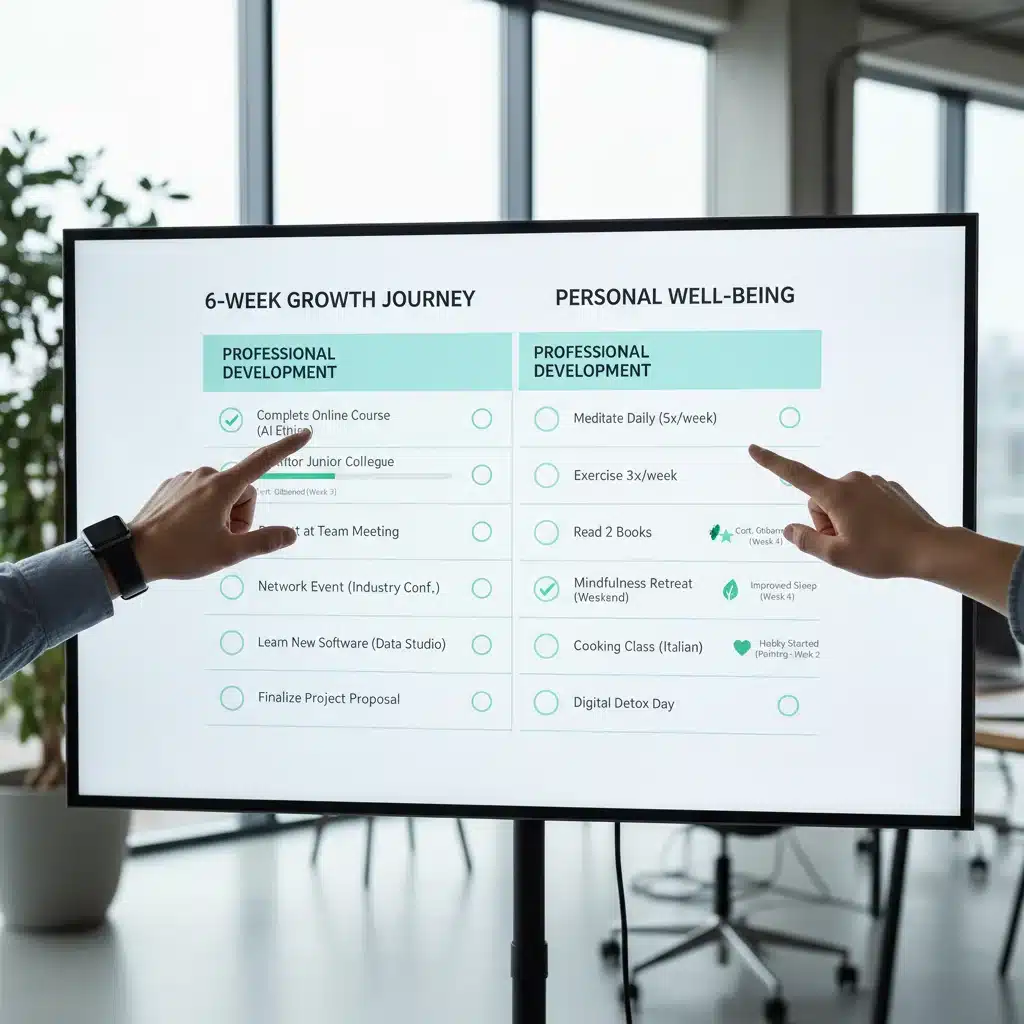
By the end of Week 6, you will have not only recovered from the acute phase of burnout but will also possess a robust framework for maintaining long-term burnout balance professionals can rely on.
Beyond the 6 Weeks: The Lifelong Journey of Burnout Balance Professionals
This 6-week plan is a powerful catalyst, but the journey towards sustainable burnout balance professionals seek is ongoing. Life is dynamic, and new challenges will inevitably arise. The key is to view these weeks not as a finish line, but as the foundation upon which you build a resilient and fulfilling life. Regularly revisit the principles outlined here, adapt them to your changing circumstances, and always prioritize your well-being. Remember, you cannot pour from an empty cup. Investing in your physical, mental, and emotional health is not a luxury; it’s a necessity for sustained professional success and personal happiness in 2026 and beyond.
Additional Resources for U.S. Professionals:
- Professional Coaching: Consider working with a certified coach specializing in executive function or work-life integration.
- Therapy/Counseling: For deeper-seated issues or persistent stress, a mental health professional can provide invaluable support.
- Workplace Wellness Programs: Explore if your employer offers Employee Assistance Programs (EAPs) or wellness initiatives.
- Books & Podcasts: Dive into resources on mindfulness, stress reduction, and productivity.
Embrace this journey with patience and self-compassion. The path to burnout balance professionals dream of is achievable, and it begins with taking that first intentional step.