Elevate Your Yoga: Functional Movement for 2026 Routine
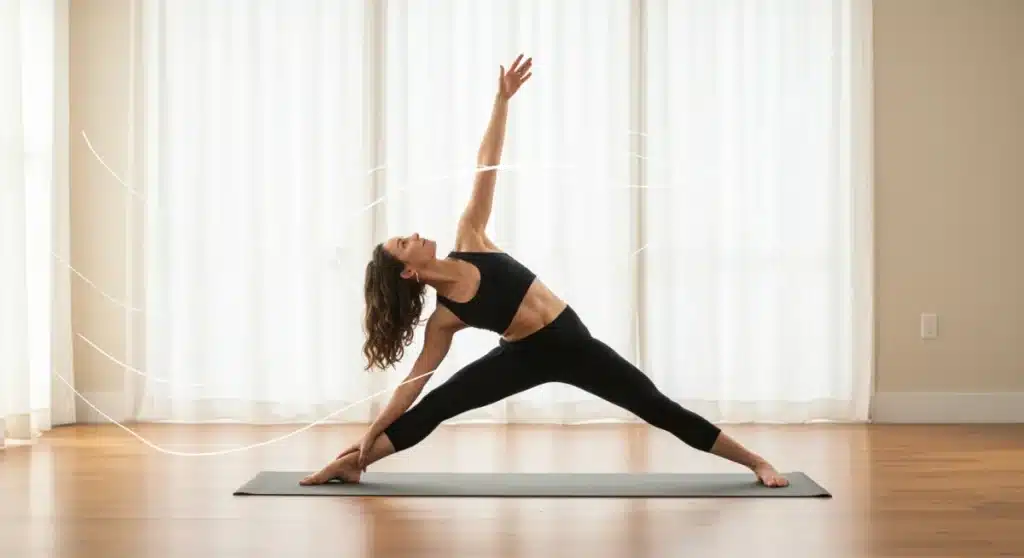
Beyond the Mat: 7 Functional Movement Exercises to Complement Your 2026 Yoga Routine
Yoga, an ancient practice rooted in physical, mental, and spiritual disciplines, has evolved significantly over millennia. While its core principles remain steadfast, the ways in which we approach and enhance our practice are continually adapting to modern understanding of the human body and its capabilities. As we look towards 2026, the integration of functional movement yoga into our routines is becoming not just a trend, but a vital component for a more holistic, injury-preventative, and deeply effective practice.
For many, yoga is synonymous with flexibility, balance, and inner peace. However, a purely static or repetitive approach, while beneficial, might overlook certain aspects of strength, agility, and real-world applicability that functional movement training excels at. Imagine a yoga practice where every pose feels more integrated, where transitions are smoother, and where your body moves with effortless grace not just on the mat, but in all aspects of your daily life. This is the promise of combining yoga with functional movement.
In this comprehensive guide, we will delve into the profound benefits of incorporating functional movement yoga exercises into your 2026 routine. We’ll explore what functional movement truly means in the context of yoga, why it’s so crucial for long-term physical health and enhanced performance, and then unveil 7 specific exercises that will transform your practice. Get ready to move beyond the mat and unlock a new dimension of strength, stability, and freedom in your body.
What is Functional Movement and Why Does it Matter for Your Yoga Practice?
At its core, functional movement refers to exercises that train the body for the activities and movements of daily life. It’s about building strength, stability, and mobility in patterns that mimic how we naturally move – pushing, pulling, squatting, hinging, lunging, rotating, and gait (walking/running). Unlike isolated exercises that target a single muscle group, functional movements engage multiple joints and muscles simultaneously, fostering coordination, balance, and overall athleticism.
So, how does this relate to yoga? While yoga inherently contains many functional movements, sometimes the emphasis on static holds or specific aesthetic forms can lead to neglecting the dynamic, multi-planar movements crucial for a truly resilient body. For instance, a Warrior II pose is functional in many ways, but how often do we practice the dynamic transition into and out of it, or integrate it with other movement patterns that mimic real-life challenges?
The synergy between functional movement yoga is powerful. Functional training can help you build the foundational strength and mobility needed to access deeper yoga poses safely and effectively. It can correct muscular imbalances, improve joint stability, and enhance proprioception (your body’s awareness in space) – all of which are invaluable for preventing injuries and advancing your yoga journey. By integrating these exercises, your yoga practice becomes less about achieving a perfect shape and more about cultivating a body that moves intelligently and efficiently in every situation.
Benefits of Integrating Functional Movement into Your Yoga Routine:
- Enhanced Strength and Stability: Functional exercises build practical strength that translates directly to holding challenging yoga poses with greater ease and control.
- Improved Mobility and Range of Motion: By moving through diverse planes and patterns, you’ll unlock greater flexibility and joint health, complementing yoga’s stretching benefits.
- Injury Prevention: A body trained in functional movement is more resilient, better equipped to handle unexpected stresses, and less prone to common yoga-related injuries.
- Better Balance and Coordination: Many functional movements inherently challenge your balance, refining your stability both on and off the mat.
- Increased Body Awareness: Understanding how your body moves in a variety of contexts deepens your proprioception, making your yoga practice more mindful and effective.
- Real-World Applicability: The strength and flexibility you gain will improve your performance in other sports, daily tasks, and overall quality of life.
- Breaking Plateaus: If you’ve hit a wall in your yoga practice, incorporating functional movements can provide the missing link to unlock new levels of strength and flexibility.
By consciously weaving these elements into your 2026 yoga routine, you’re not just doing yoga; you’re cultivating a truly functional, adaptable, and robust body for years to come. Let’s explore the seven exercises that will help you achieve this.
7 Essential Functional Movement Exercises to Complement Your 2026 Yoga Routine
These exercises are carefully selected to target crucial movement patterns often underemphasized in traditional yoga, or to enhance the foundational strength needed for advanced poses. Aim to incorporate 2-3 of these into your warm-up, cool-down, or as a standalone mini-session a few times a week.
1. The Goblet Squat: Building Foundational Lower Body Strength
The squat is arguably the most fundamental human movement pattern. While many yoga poses involve squatting (like Chair Pose or Garland Pose), adding a weighted goblet squat can significantly improve lower body strength, hip mobility, and core stability – all essential for a powerful and stable yoga practice.
How to Perform:
- Stand with your feet shoulder-width apart, toes pointing slightly out.
- Hold a dumbbell or kettlebell vertically against your chest, cupping the top with both hands.
- Keeping your chest lifted and back straight, initiate the movement by pushing your hips back as if sitting in a chair.
- Descend until your thighs are parallel to the floor, or as deep as your mobility allows without rounding your back.
- Ensure your knees track in line with your toes and don’t collapse inward.
- Drive through your heels to return to the starting position, squeezing your glutes at the top.
Yoga Connection:
Strengthens legs and glutes for Warrior poses, Chair Pose, and standing balances. Improves hip mobility for deep forward folds and hip openers.
2. The Lunge with Torso Twist: Dynamic Stability and Rotation
Lunges are fantastic for building unilateral leg strength and balance, crucial for many standing yoga poses. Adding a torso twist introduces a rotational element, improving core stability and spinal mobility in a functional pattern.
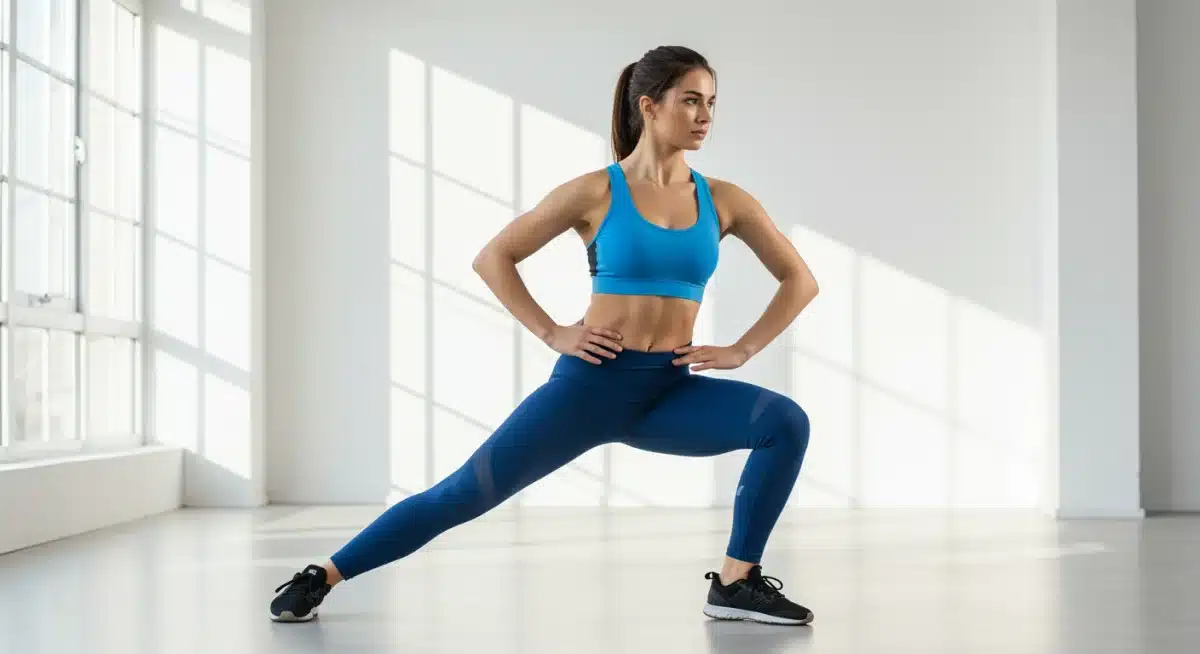
How to Perform:
- Start in a standing position, feet hip-width apart.
- Step forward with your right leg, lowering your hips until both knees are bent at approximately a 90-degree angle. Ensure your front knee is directly over your ankle and your back knee hovers above the ground.
- As you lunge, extend your arms forward at shoulder height.
- Keeping your hips relatively stable, twist your torso to the right (towards your front leg).
- Return to center, then push off your front foot to return to the starting position.
- Alternate legs.
Yoga Connection:
Enhances balance and single-leg strength for poses like Warrior I, II, and III, and Half Moon. Improves spinal rotation for twists like Revolved Triangle and Seated Spinal Twist.
3. The Bear Crawl: Full-Body Coordination and Core Engagement
Often overlooked, crawling patterns are incredibly functional, engaging the entire body in a coordinated manner. The bear crawl builds core strength, shoulder stability, hip mobility, and cross-body coordination, all vital for inversions, arm balances, and smooth transitions in yoga.
How to Perform:
- Start on all fours, hands directly under shoulders, knees directly under hips.
- Lift your knees off the ground just an inch or two, keeping your back flat and core engaged.
- Move forward by simultaneously moving your right hand and left foot, then your left hand and right foot.
- Keep your hips low and stable, avoiding excessive rocking or arching of the back.
- Crawl forward for a set distance, then backward.
Yoga Connection:
Develops core strength for planks, chaturanga, and inversions. Improves shoulder stability for Downward Dog, Handstand, and Crow Pose. Enhances body awareness and coordination for flowing sequences.
4. Turkish Get-Up (Partial or Full): Integrated Strength and Stability
The Turkish Get-Up is a complex, multi-stage movement that builds incredible full-body strength, stability, and mobility. Even practicing a partial get-up (e.g., from lying to elbow to hand) can provide immense benefits, teaching your body to move as a cohesive unit.
How to Perform (Simplified for Yoga Practitioners):
- Lie on your back, right knee bent, right foot flat on the floor. Right arm extended towards the ceiling, holding a very light weight (or just your fist). Left arm extended to the side at a 45-degree angle.
- Pressing through your right heel and left elbow, roll onto your left elbow, keeping your right arm extended towards the ceiling.
- Press through your left hand to come onto your left hand, lifting your torso further.
- Reverse the movement with control to return to the starting position.
- Repeat on the other side.
Yoga Connection:
Builds integrated core, shoulder, and hip strength. Improves transitions between lying, seated, and standing poses. Enhances body control and stability, particularly useful for arm balances and inversions.
5. Bird-Dog: Core Stability and Spinal Health
The Bird-Dog is a classic core exercise that teaches anti-rotation and anti-extension, meaning it trains your core to resist twisting and arching of the lower back. This is crucial for protecting your spine and maintaining stability in many yoga poses.
How to Perform:
- Start on all fours, hands directly under shoulders, knees under hips. Keep your back flat and core engaged.
- Slowly extend your right arm forward and your left leg straight back, keeping them parallel to the floor.
- Focus on keeping your hips level and your torso stable, avoiding any rocking or arching.
- Hold for a moment, then slowly return to the starting position.
- Alternate sides.
Yoga Connection:
Strengthens deep core muscles for spinal support in all poses. Improves balance and coordination. Builds stability for poses like Warrior III and balancing poses.
6. Cossack Squat: Deep Hip Mobility and Unilateral Strength
The Cossack squat is a fantastic exercise for developing deep hip mobility in the frontal plane (side-to-side movement) and unilateral leg strength. This range of motion is often neglected but can significantly improve your ability to access deep hip openers and side lunges in yoga.
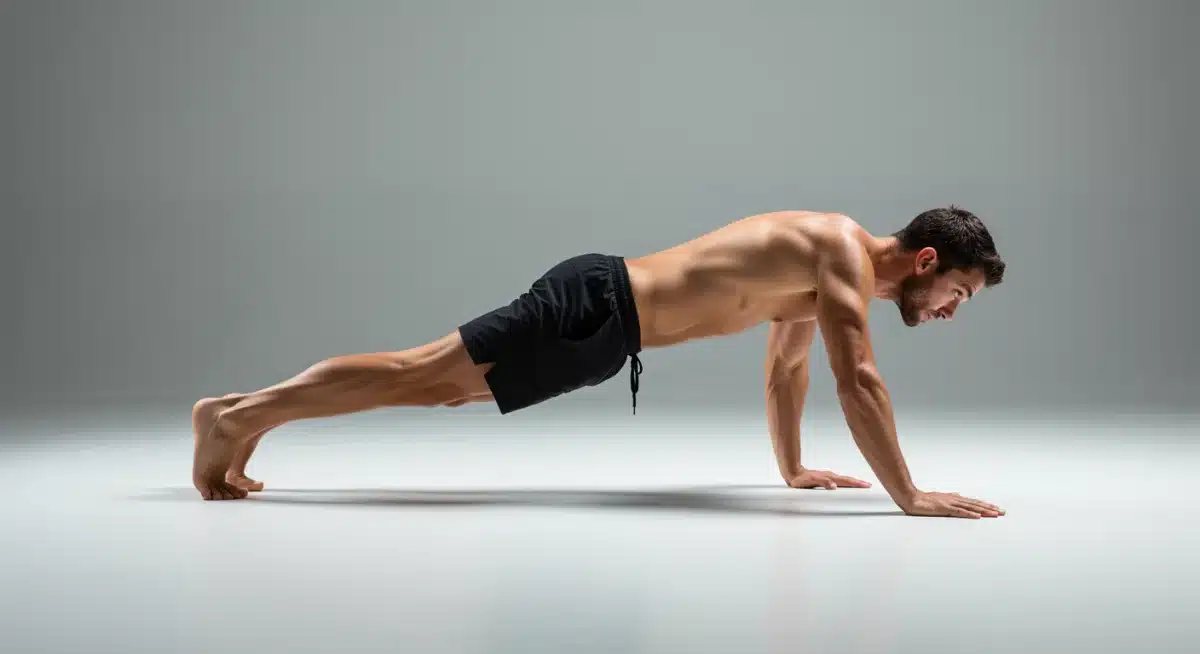
How to Perform:
- Start with a wide stance, feet much wider than shoulder-width, toes pointing slightly out.
- Shift your weight to one side, bending that knee and keeping the other leg straight, foot flat or heel slightly lifted if needed.
- Descend into a deep squat on one side, keeping your chest lifted and spine neutral.
- The straight leg should be fully extended with the foot either flat or toes pointing up.
- Push off the bent leg to return to the starting wide stance, then shift to the other side.
Yoga Connection:
Dramatically improves hip mobility for poses like Goddess Pose, Side Lunge, and various seated hip openers. Builds unilateral leg strength and stability, aiding in deeper, more controlled movements.
7. Dead Hangs: Grip Strength and Shoulder Decompression
While not a dynamic movement in itself, the dead hang is incredibly functional for decompressing the spine, improving shoulder health, and building grip strength – an often-overlooked aspect of upper body strength essential for arm balances and inversions.
How to Perform:
- Find a sturdy pull-up bar or overhead structure.
- Grasp the bar with an overhand grip, hands slightly wider than shoulder-width apart.
- Hang freely, allowing your shoulders to relax and your body to decompress.
- Keep your core gently engaged to prevent excessive swinging.
- Hold for 20-60 seconds, or as long as comfortable.
Yoga Connection:
Decompresses the spine, counteracting compression from seated poses. Improves shoulder mobility and health, reducing risk of injury in arm balances and inversions. Builds grip strength, crucial for holding Handstand, Crow Pose, and other arm supports.
Integrating These Exercises into Your 2026 Yoga Routine
You don’t need to dedicate an entire separate workout to these functional movements. The beauty of functional movement yoga is its seamless integration. Here are a few ways to weave them into your practice:
- Warm-Up Enhancers: Start your yoga session with 5-10 minutes of functional movements. A few rounds of bear crawls, bird-dogs, or light goblet squats can prime your body for the practice ahead.
- Transition Drills: Practice lunges with twists as transitions between standing poses, or use partial Turkish Get-Ups to move from seated to standing sequences.
- Strength Builders: Dedicate 1-2 days a week to a short, focused functional movement session (15-20 minutes) separate from your main yoga practice. This could involve 3 sets of 8-12 repetitions for 3-4 of these exercises.
- Cool-Down and Recovery: Dead hangs can be an excellent way to finish a challenging yoga practice, decompressing the spine and stretching the shoulders.
- Listen to Your Body: Always start with bodyweight or very light resistance. Focus on form over speed or weight. As your strength and coordination improve, you can gradually increase intensity.
Remember, the goal is not to replace your yoga practice, but to enrich it. By strengthening your body in these fundamental movement patterns, you’ll find greater ease, stability, and freedom in your asanas, leading to a more profound and sustainable yoga journey in 2026 and beyond.
The Future of Yoga: Holistic and Functional
As we move further into the 21st century, the understanding of human movement continues to evolve. The rigid separation between ‘yoga’ and ‘strength training’ or ‘functional fitness’ is increasingly blurring. Practitioners are seeking more comprehensive approaches that support long-term health, performance, and injury resilience. The concept of functional movement yoga is at the forefront of this evolution.
By embracing these complementary exercises, you are not just improving your physical capabilities; you are also deepening your body awareness and understanding. You learn how your body moves, how it stabilizes, and how different parts work together as an integrated system. This heightened awareness translates directly to your yoga mat, allowing for more intelligent alignment, more powerful engagements, and a more intuitive flow.
Imagine the confidence of moving into a challenging arm balance, knowing your shoulders are stable and strong, or sinking into a deep hip opener with the assurance that your hips have the necessary mobility and support. This is the empowerment that functional movement brings to your yoga practice.
Furthermore, incorporating functional movements helps address potential imbalances that might arise from a highly specialized practice. While yoga offers incredible benefits, a focus on certain planes of movement or muscle groups might inadvertently neglect others. Functional training acts as a corrective and complementary force, ensuring a well-rounded and balanced physique.
Beyond the Physical: Mental and Emotional Benefits
The benefits of integrating functional movement yoga extend beyond the purely physical. The mental discipline required to learn and master new movement patterns can be incredibly rewarding. It fosters a growth mindset, encouraging you to step outside your comfort zone and explore new dimensions of your physical potential.
The increased confidence that comes with a stronger, more capable body can also positively impact your mental and emotional well-being. Feeling more grounded and stable in your physical self often translates to greater mental and emotional resilience. The focus required during functional exercises can also serve as a form of moving meditation, further enhancing the mindfulness aspect of your yoga practice.
In 2026, let your yoga journey be one of continuous growth, exploration, and empowerment. By thoughtfully combining the ancient wisdom of yoga with the modern science of functional movement, you are building a practice that is not only deeply enriching but also profoundly sustainable for a lifetime of vibrant health and joyful movement.
Conclusion: Your Enhanced 2026 Yoga Practice Awaits
The journey to a more robust and resilient yoga practice is an ongoing one. By consciously integrating these 7 functional movement exercises into your 2026 routine, you are taking a proactive step towards a stronger, more flexible, and more balanced body. The goblet squat, lunge with torso twist, bear crawl, Turkish get-up, bird-dog, Cossack squat, and dead hang are not just exercises; they are keys to unlocking a deeper, more integrated understanding of your body’s potential.
Embrace the philosophy of functional movement yoga – where every breath, every pose, and every movement prepares you not just for the mat, but for the rich tapestry of life itself. Your body is designed to move, to adapt, and to thrive. Give it the tools it needs to do so, and watch your yoga practice, and indeed your entire well-being, flourish like never before. Here’s to a strong, stable, and incredibly mobile 2026!