2026 Stress Reduction Apps: Best ROI for Mental Health?

Comparing 2026 Stress Reduction Apps: Which One Offers the Best ROI for Your Mental Health?
In our fast-paced, ever-connected world, stress has become an unwelcome but ubiquitous companion for many. The relentless demands of work, personal life, and constant digital stimulation can take a significant toll on our mental well-being. Fortunately, technology has also offered a powerful antidote: stress reduction apps. These digital tools promise to guide us towards greater calm, focus, and resilience, but with a rapidly expanding market, how do you choose the one that truly offers the best return on investment (ROI) for your mental health?
As we delve into 2026, the landscape of mental wellness technology has evolved considerably. Apps are no longer simple meditation timers; they are sophisticated platforms offering personalized programs, biometric feedback integration, AI-powered coaching, and immersive experiences designed to tackle the multifaceted nature of stress. This comprehensive guide will dissect the leading stress reduction apps of 2026, evaluating their features, scientific backing, user experience, and, crucially, their value proposition, helping you make an informed decision on where to invest your time and money for optimal mental health benefits.
The Evolving Landscape of Stress Reduction Apps in 2026
The year 2026 marks a pivotal point in mental wellness technology. Gone are the days when a basic meditation timer sufficed. Today’s stress management apps are highly specialized, often incorporating elements of cognitive behavioral therapy (CBT), dialectical behavior therapy (DBT), biofeedback, and advanced data analytics. The emphasis has shifted from mere relaxation to holistic well-being, focusing on building long-term resilience and emotional regulation skills.
We’re seeing a rise in apps that integrate with wearable technology, providing real-time physiological data such as heart rate variability (HRV), sleep patterns, and even galvanic skin response. This data allows for hyper-personalized interventions, adapting exercises and content to a user’s current stress levels and progress. Furthermore, AI-driven chatbots are becoming more sophisticated, offering conversational support and guiding users through exercises with a level of personalization previously only available through human coaching.
The market has also diversified to cater to specific needs. Some apps focus intensely on sleep improvement, others on anxiety reduction, and a growing number on workplace stress or academic pressure. Understanding your primary stress triggers and desired outcomes is the first step in navigating this rich ecosystem of mental wellness tools.
Defining ROI for Mental Health Apps: Beyond Just Cost
When we talk about ROI for stress reduction apps, it’s not solely about the monetary cost versus the perceived benefit. While subscription fees are a factor, the true return on investment in mental health encompasses several dimensions:
- Time Investment: How much time do you need to dedicate daily or weekly to see results? Is the app efficient in its delivery of content?
- Effectiveness: Does the app deliver tangible improvements in stress levels, mood, sleep quality, and overall well-being? Is there scientific evidence to back its claims?
- Engagement & Retention: Is the app designed to keep you motivated and consistent? Does it offer features that encourage long-term use?
- Personalization: How well does the app adapt to your individual needs, preferences, and progress?
- Accessibility: Is the app easy to use, available on your preferred devices, and does it offer features for diverse user groups (e.g., multilingual support, accessibility features)?
- Privacy & Data Security: Given the sensitive nature of mental health data, how robust are the app’s privacy policies and security measures?
- Cost-Effectiveness: Does the price reflect the value and quality of the features and support offered? Are there free tiers that provide significant value?
Our analysis of top stress apps in 2026 will weigh these factors heavily to determine which platforms truly offer the best holistic ROI for your mental health.
Deep Dive into Leading Stress Reduction Apps of 2026
1. Calm (2026 Edition): The Serenity Standard
Calm continues to be a household name in 2026, building upon its foundation of guided meditations, sleep stories, and soothing soundscapes. The 2026 iteration introduces several advancements, including more sophisticated AI-driven personalized meditation paths that adapt based on your reported mood and biometric data from integrated wearables. Its sleep stories now incorporate adaptive sound engineering, subtly adjusting audio cues based on your sleep cycle detected by smart mattresses or rings.
Key Features:
- Extensive library of guided meditations for various purposes (stress, anxiety, focus, self-compassion).
- "Sleep Stories" narrated by celebrities, now with adaptive soundscapes.
- "Daily Calm" program offering a new 10-minute meditation each day.
- Integration with popular wellness wearables for personalized insights (HRV, sleep tracking).
- "Mindful Movement" videos for gentle stretching and yoga.
- Advanced mood tracking and journaling features with AI analysis.
Scientific Backing: Calm has historically invested in research, and the 2026 version continues this trend, citing studies on its effectiveness in reducing stress, improving sleep, and increasing mindfulness. The AI personalization algorithms are continuously refined based on user outcome data, aiming for evidence-based adaptation.
User Experience & Engagement: The UI remains clean and intuitive, focusing on ease of use. The personalized paths and daily content keep users engaged, while gentle reminders and progress tracking encourage consistency. The celebrity narrators also add a unique draw.
Cost-Effectiveness: Calm operates on a freemium model, with a robust free tier offering basic meditations. The premium subscription, while on the higher end, is justified by the vast content library, advanced features, and continuous updates. For those seeking a comprehensive and polished experience, the ROI is high.
2. Headspace (2026 Edition): Your Mind’s Personal Trainer
Headspace in 2026 has doubled down on its "mindfulness as a skill" approach, positioning itself as a personal trainer for your mind. The app now offers more structured courses, akin to digital mental health curricula, focusing on specific skill development like emotional regulation, cognitive reframing, and resilience building. Its AI coach, "MindGuide," provides interactive feedback and tailored exercises.
Key Features:
- Curated meditation courses, from beginner to advanced, covering various topics.
- "MindGuide" AI coach offering interactive sessions and personalized feedback.
- "SOS" meditations for moments of acute stress or panic.
- Focus music and soundscapes for concentration and relaxation.
- "Move Mode" for mindful exercise.
- Integration with corporate wellness programs, offering tailored content for workplace stress.
Scientific Backing: Headspace has a strong academic partnership program, collaborating with universities to conduct research on its efficacy. The 2026 version emphasizes its evidence-based curriculum design, drawing heavily from CBT and mindfulness-based stress reduction (MBSR) principles.
User Experience & Engagement: Headspace’s signature playful yet clear animation style makes complex concepts accessible. The structured course format appeals to users who prefer a progressive learning path. "MindGuide" adds a layer of interactivity that enhances engagement and accountability.
Cost-Effectiveness: Similar to Calm, Headspace offers a free trial and a premium subscription. Its slightly more educational and structured approach might appeal more to those who want to actively learn and build mental skills. The ROI is excellent for users committed to a structured learning journey in mindfulness.

3. Aura (2026 Edition): The Personalized AI Wellness Coach
Aura has transformed into a powerful AI-driven wellness platform in 2026, distinguishing itself with hyper-personalization. Upon onboarding, users complete a detailed assessment, and Aura’s AI then curates a daily selection of meditations, coaching sessions, sleep stories, and even cognitive exercises from a vast library of expert content. It learns from your feedback and biometric data, constantly refining its recommendations.
Key Features:
- Highly personalized daily wellness recommendations powered by advanced AI.
- Access to a diverse library of content from various coaches and therapists.
- "Emotional Guidance" chatbot for real-time support and journaling.
- "Life Coaching" modules on topics like productivity, relationships, and financial stress.
- Biofeedback integration for real-time stress monitoring and adaptive exercises.
- Community features for shared experiences and support.
Scientific Backing: Aura’s strength lies in its adaptive algorithms, which are built on machine learning principles and psychological frameworks. While not producing as much proprietary research as Calm or Headspace, it curates content from evidence-based practitioners and continuously optimizes its personalization engine for user outcomes.
User Experience & Engagement: The personalization is Aura’s biggest draw, making each session feel uniquely tailored. The variety of coaches and content styles keeps the experience fresh, and the "Emotional Guidance" chatbot provides an immediate, accessible layer of support. It’s designed for users who want a truly bespoke wellness journey.
Cost-Effectiveness: Aura’s premium subscription is competitive, especially considering the depth of personalization and the breadth of its content library, which features contributions from many experts. For those who feel overwhelmed by choice or desire a highly adaptive experience, Aura offers substantial ROI.
4. BetterHelp / Talkspace (2026 Integration): Bridging Apps & Therapy
While not purely stress reduction apps in the traditional sense, the 2026 iterations of BetterHelp and Talkspace have significantly integrated app-based tools alongside their core online therapy services. They now offer a suite of self-help modules, mood tracking, guided exercises, and even AI-powered journaling tools that complement live therapy sessions. This hybrid model offers a unique ROI for those seeking professional support combined with self-guided practice.
Key Features:
- Unlimited text, audio, and video messaging with a licensed therapist.
- Scheduled live video or phone sessions.
- Integrated self-help modules based on CBT, DBT, and mindfulness.
- Advanced mood and thought-pattern tracking with therapist review.
- Journaling prompts and AI-powered sentiment analysis.
- Worksheets and exercises assigned by therapists, accessible via the app.
Scientific Backing: These platforms are built on the foundation of evidence-based psychotherapy. The app features are designed to extend and reinforce the therapeutic process, with clinical oversight ensuring their efficacy.
User Experience & Engagement: The seamless integration of therapy with self-help tools creates a cohesive and supportive experience. Users feel continuously supported, not just during scheduled sessions. The ability to track progress and communicate with a therapist through the app enhances engagement and accountability.
Cost-Effectiveness: The cost is significantly higher than standalone stress reduction apps, as it includes access to licensed therapists. However, for individuals who require professional mental health support, this hybrid model offers an unparalleled ROI by combining accessible therapy with powerful self-management tools, potentially reducing the overall need for more intensive or frequent in-person therapy.
5. Wysa (2026 Edition): Your AI Companion for Emotional Support
Wysa, the AI-powered "penguin" chatbot, has matured considerably by 2026, offering a unique blend of conversational AI and self-help tools. It provides anonymous, empathetic support and guides users through evidence-based techniques like CBT, DBT, and mindfulness. The 2026 version includes advanced voice recognition for mood analysis and offers more interactive role-playing scenarios to practice coping skills.
Key Features:
- AI chatbot for confidential emotional support and guided conversations.
- Techniques based on CBT, DBT, and mindfulness.
- Interactive tools for managing negative thoughts, anxiety, and sleep issues.
- Optional access to human therapists for specialized coaching (premium feature).
- Mood tracking and progress visualization.
- Voice analysis for detecting emotional nuances and tailoring responses.
Scientific Backing: Wysa’s AI algorithms are developed in collaboration with psychologists and mental health experts. It has been studied for its effectiveness in reducing symptoms of depression and anxiety, particularly as a first-line intervention or supplementary tool. The AI’s responses are designed to mirror therapeutic techniques.
User Experience & Engagement: Wysa’s conversational interface makes it highly accessible and non-intimidating, especially for those new to mental wellness apps or hesitant about human interaction. The AI’s empathetic responses and guided exercises make it feel like a supportive companion. The anonymity is a significant advantage for many users.
Cost-Effectiveness: Wysa offers a very generous free tier with extensive AI-guided support. The premium subscription, which unlocks human coaching and more advanced features, is very affordable compared to traditional therapy. For users seeking accessible, private, and effective self-help, Wysa offers an exceptional ROI, especially for managing everyday stress management.
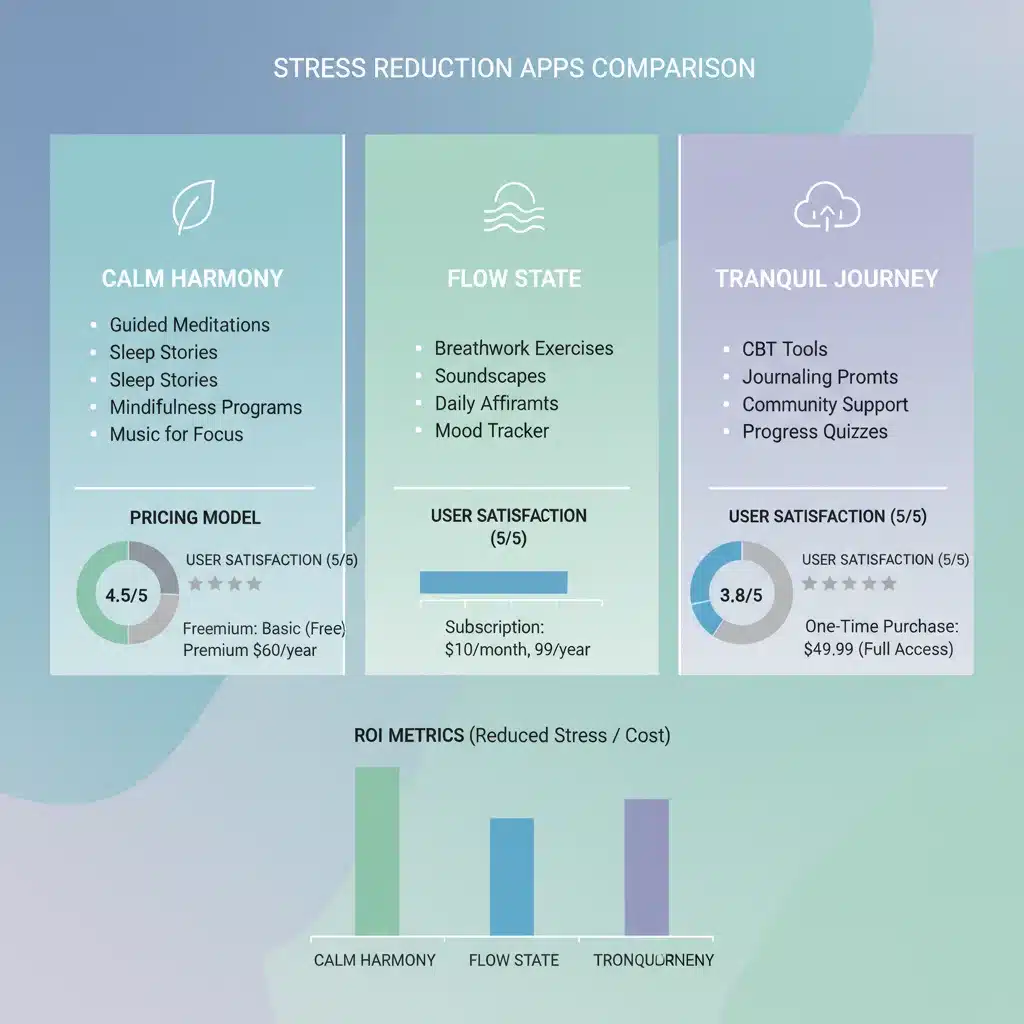
Comparative Analysis of ROI Factors
To truly understand the ROI of these stress reduction apps, let’s break down how they stack up across key factors:
Content Depth & Variety
- Calm & Headspace: Both offer extensive libraries, with Calm excelling in sleep content and Headspace in structured learning paths. Their content is consistently high quality and professionally produced.
- Aura: Boasts a massive, diverse library from many experts, offering unparalleled variety but potentially less consistency in production style. The AI’s curation is key here.
- BetterHelp/Talkspace (App Features): Content is often supplementary to therapy, focusing on specific therapeutic techniques and exercises assigned by a therapist.
- Wysa: Content is primarily delivered through interactive AI conversations, making it highly personalized but less about browsing a library of pre-recorded sessions.
Personalization & Adaptability
- Aura: Leads the pack with its AI-driven hyper-personalization, constantly adapting to user feedback and biometric data.
- Calm: Strong personalization with AI-guided paths and wearable integration.
- Headspace: Personalization comes through structured course recommendations and the "MindGuide" AI.
- BetterHelp/Talkspace: Personalization is driven by the human therapist, with app tools supporting the individualized treatment plan.
- Wysa: Highly adaptive conversational AI that learns from user input and emotional state.
Scientific & Clinical Backing
- BetterHelp/Talkspace: Highest clinical backing due to licensed therapists and evidence-based therapy models.
- Headspace & Calm: Strong emphasis on research and collaboration with academic institutions, with continuous studies on effectiveness.
- Wysa: AI algorithms are clinically informed, and the app has been part of research studies demonstrating efficacy.
- Aura: Relies on the expertise of its content creators and the effectiveness of its personalization algorithms, which are continually refined based on user data.
User Engagement & Retention
- Headspace: Its structured, gamified approach and friendly animations lead to excellent engagement.
- Calm: The daily content and popular narrators help maintain user interest.
- Aura: The novelty of hyper-personalization and diverse content keeps users coming back.
- Wysa: The empathetic AI companion fosters a unique sense of connection and consistent use.
- BetterHelp/Talkspace: The therapeutic relationship provides inherent motivation for continued engagement.
Pricing & Accessibility
- Wysa: Offers the most value in its free tier, making it highly accessible. Premium is very affordable.
- Calm & Headspace: Premium subscriptions are mid-to-high range, offering extensive features for the price. Good free trials.
- Aura: Competitive pricing for its hyper-personalized, diverse content.
- BetterHelp/Talkspace: The most expensive, but includes professional therapy, offering a different value proposition.
Choosing Your Best ROI: Tailoring to Your Needs
The "best ROI" for stress reduction apps ultimately depends on your individual needs, preferences, and budget. Here’s a breakdown to help you decide:
- For the Comprehensive Mindfulness Seeker: If you’re looking for a polished, vast library of guided meditations, sleep aids, and gentle movement, Calm offers an excellent ROI. Its continuous updates and celebrity content make it a reliable choice for holistic well-being.
- For the Structured Learner: If you prefer a more educational, skill-building approach to mindfulness and want to understand the "how" behind stress reduction, Headspace is likely your best bet. Its structured courses and "MindGuide" provide a clear path to mental resilience.
- For the Hyper-Personalization Enthusiast: If you desire an app that truly learns and adapts to your emotional state and preferences, curating a unique daily wellness journey, Aura stands out. Its AI-driven approach maximizes relevance and engagement.
- For Those Needing Professional Therapy Integration: If your stress extends to clinical levels or you benefit from structured professional guidance, BetterHelp/Talkspace’s integrated app features offer an unparalleled ROI by bridging self-help with licensed therapy. This is an investment in direct clinical support.
- For Accessible, Conversational Support: If you’re seeking anonymous, empathetic, and interactive support, especially as a first step or supplement, Wysa provides exceptional value. Its AI companion offers a unique and highly accessible form of emotional guidance.
The Future of Stress Reduction Apps and Mental Health ROI
Looking beyond 2026, the evolution of stress reduction apps will continue at a rapid pace. We can anticipate even deeper integration with biometric data, predictive analytics to identify potential stress triggers before they manifest, and more immersive experiences through augmented and virtual reality. The line between wellness apps and clinical mental health tools will further blur, with more apps seeking FDA approval for specific therapeutic uses.
The focus on ROI will also sharpen, with platforms providing clearer metrics on how their interventions translate into improved productivity, reduced healthcare costs, and enhanced quality of life. As our understanding of the brain and technology advances, these apps will become even more powerful allies in our quest for mental well-being.
Conclusion: Investing in Your Inner Peace
Investing in a stress reduction app is an investment in your most valuable asset: your mental health. In 2026, the options are richer and more sophisticated than ever before, offering a spectrum of approaches from guided meditation to AI-powered coaching and integrated therapy. By carefully considering your individual needs, preferred learning style, and budget, you can select an app that not only fits seamlessly into your life but also delivers a profound and lasting return on your investment in inner peace and resilience.
Whether you choose the calming embrace of Calm, the structured learning of Headspace, the personalized curation of Aura, the therapeutic strength of BetterHelp/Talkspace, or the empathetic AI of Wysa, the key is consistency. Regular engagement with these tools is what unlocks their true potential and transforms your relationship with stress. Make 2026 the year you prioritize your mental well-being and leverage the power of technology to cultivate a calmer, more focused, and more resilient you.