Boost Your Balance by 10% in 30 Days: A Practical Yoga Challenge for 2026
Are you ready to embark on a transformative journey that will not only enhance your physical stability but also bring a profound sense of calm and focus into your daily life? Welcome to our yoga balance challenge, a meticulously designed 30-day program aimed at boosting your balance by a remarkable 10% (or more!) by the time 2026 fully unfolds. In a world that constantly pulls us in different directions, cultivating inner and outer balance is more crucial than ever. This challenge isn’t just about mastering challenging yoga poses; it’s about developing a deeper connection with your body, improving your proprioception, and strengthening your core – the foundation of all movement and stability.
Many of us take our balance for granted until we notice it faltering. Whether it’s a slight stumble, difficulty standing on one leg, or simply feeling less stable during everyday activities, compromised balance can impact our confidence and overall quality of life. The good news? Balance is a skill, and like any skill, it can be significantly improved with consistent practice and the right approach. This yoga balance challenge provides exactly that: a structured, progressive plan that makes improving your balance achievable and enjoyable.
By committing to this 30-day challenge, you’re not just signing up for a series of exercises; you’re investing in your long-term health and well-being. Improved balance reduces the risk of falls, enhances athletic performance, and contributes to better posture and body awareness. Furthermore, the mindfulness inherent in yoga practice helps to quiet the mind, reduce stress, and foster a greater sense of presence. So, if you’re looking for a practical, effective way to boost your balance and embrace a more stable, grounded existence, you’ve come to the right place. Let’s dive into what this exciting yoga balance challenge entails!
Understanding the Importance of Balance
Before we delve into the specifics of our yoga balance challenge, it’s essential to understand why balance is so vital. Balance is the ability to maintain your body’s center of gravity over its base of support. It’s a complex process involving multiple systems: your visual system (eyes), vestibular system (inner ear), and somatosensory system (sensation from skin, muscles, and joints). When these systems work in harmony, you move with grace and stability. When one or more are compromised, balance issues can arise.
Physical Benefits of Enhanced Balance
- Fall Prevention: This is perhaps the most critical benefit, especially as we age. Strong balance significantly reduces the risk of falls and related injuries.
- Improved Athletic Performance: Athletes across various disciplines, from running to gymnastics, rely heavily on superior balance for agility, power, and injury prevention.
- Better Posture: A strong core and good balance go hand-in-hand with improved posture, reducing back pain and enhancing overall body alignment.
- Increased Body Awareness (Proprioception): Balance training sharpens your body’s ability to sense its position and movement in space, leading to more coordinated and efficient movements.
- Enhanced Core Strength: Many balance poses inherently engage and strengthen your core muscles, which are vital for spinal support and overall stability.
Mental and Emotional Benefits
The benefits of a consistent yoga balance challenge extend beyond the physical realm:
- Increased Focus and Concentration: Holding balance poses demands intense concentration, training your mind to stay present and focused.
- Reduced Stress and Anxiety: The meditative aspect of yoga, especially when focusing on balance, can calm the nervous system and alleviate stress.
- Greater Confidence: Mastering challenging balance poses builds self-efficacy and confidence, translating into other areas of life.
- Mind-Body Connection: Yoga fosters a deeper understanding and connection between your mental state and physical sensations, promoting holistic well-being.
Recognizing these profound benefits sets the stage for a truly rewarding experience as you embark on this yoga balance challenge. It’s not just about improving a physical attribute; it’s about cultivating a more centered and resilient self.
Setting Your 10% Balance Improvement Goal for 2026
A 10% improvement in balance might sound specific, but it’s a tangible goal that provides motivation and a clear benchmark for success in our yoga balance challenge. How do you measure a 10% improvement? While there isn’t a single universal balance meter, we can use a combination of simple self-assessments and qualitative observations. The key is to establish a baseline at the beginning of the challenge.
Establishing Your Baseline
Before you begin the daily practices, take a few minutes to perform these simple tests. Record your results. You’ll re-test yourself at the end of the 30 days to see your progress.
- Single-Leg Stand Test: Stand on one leg, with your hands on your hips. Lift your other foot slightly off the ground, aiming for your knee to be bent at a 90-degree angle. Start a timer as soon as your foot leaves the ground and stop when you lose balance, put your foot down, or move your hands from your hips. Repeat three times on each leg and record your longest time.
- Tandem Stand Test: Stand with one foot directly in front of the other, heel touching toe. Hold this position for as long as you can without moving your feet or losing balance. Repeat with the other foot in front. Record your longest time for each.
- Qualitative Assessment: Pay attention to your everyday activities. Do you feel stable walking on uneven surfaces? Can you easily reach for something overhead without wobbling? Note any specific instances where you feel unsteady.
Your goal is to increase your holding times in the single-leg and tandem stand tests by at least 10% by the end of the 30 days. For example, if you initially held a single-leg stand for 20 seconds, aim for 22 seconds or more. Qualitatively, you should feel more confident and stable in your daily movements. This measurable approach makes the yoga balance challenge even more rewarding.
The 30-Day Yoga Balance Challenge Structure
This yoga balance challenge is structured to progressively build your strength, flexibility, and proprioception. Each week introduces new elements and builds upon the previous one. Consistency is key, so aim to practice daily, even if it’s just for 10-15 minutes on busy days.
Week 1: Foundations and Grounding
This week focuses on establishing a strong foundation. We’ll concentrate on connecting with the earth, understanding proper alignment, and engaging core muscles. The poses are generally simpler, allowing you to focus on form and breath.
- Daily Focus: Grounding, breath awareness, core engagement.
- Key Poses:
- Mountain Pose (Tadasana): The ultimate grounding pose. Focus on distributing weight evenly through your feet, engaging your thighs, and lengthening your spine.
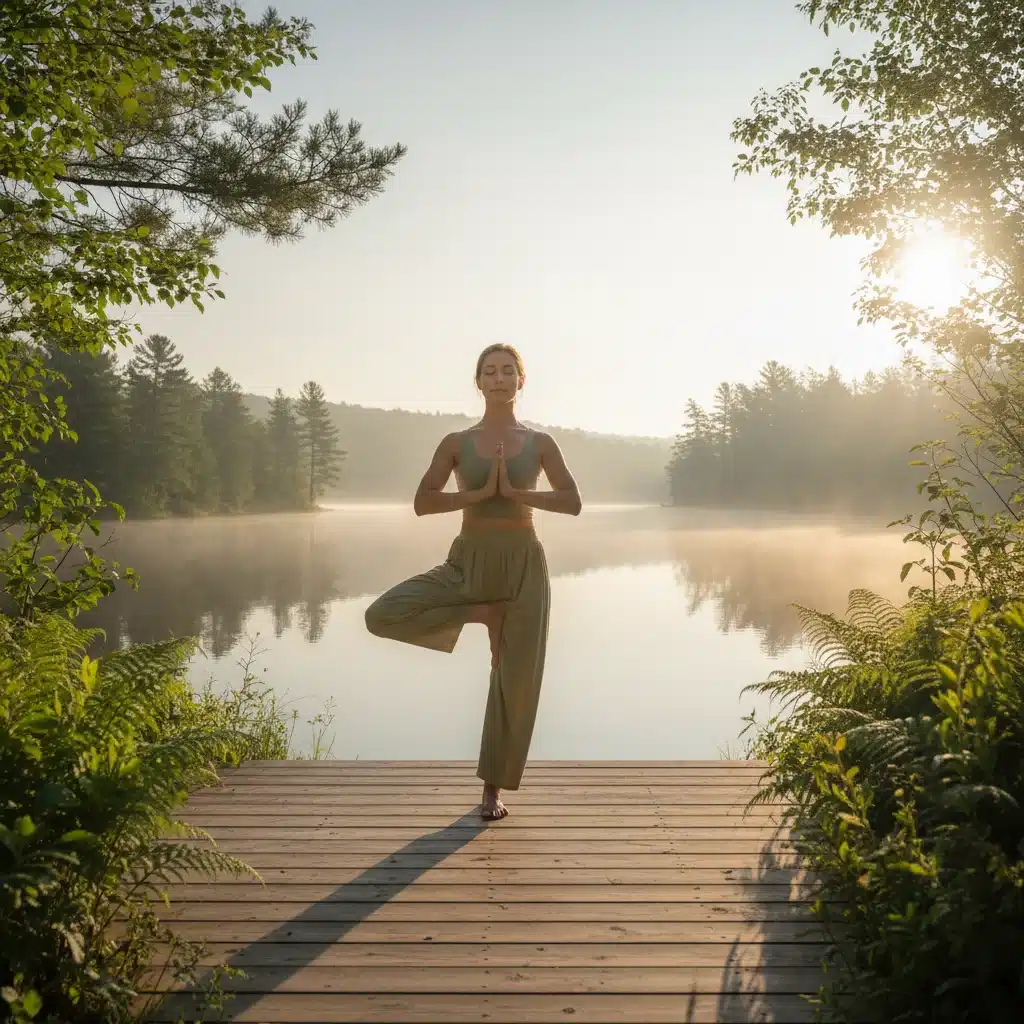
- Tree Pose (Vrksasana): Start with your foot on your ankle or calf, gradually moving to your inner thigh. Focus on a steady gaze (drishti) and engaging your standing leg.
- Warrior I & II (Virabhadrasana I & II): These poses build leg strength and open the hips, crucial for stability.
- Chair Pose (Utkatasana): Strengthens legs and core, improving overall stability.
- Pelvic Tilts & Cat-Cow: To awaken and mobilize the spine and core.
- Daily Practice: 15-20 minutes. Start with a few minutes of mindful breathing, flow through the key poses, holding each for 5-10 breaths. Finish with a short Savasana (relaxation).
Week 2: Building Stability and Core Strength
Building on the foundation, Week 2 introduces poses that further challenge your stability and actively engage your core. You’ll notice an increased demand on your abdominal muscles and a greater need for mental focus.
- Daily Focus: Core activation, controlled movement, extended holds.
- Key Poses (in addition to Week 1):
- Warrior III (Virabhadrasana III): A powerful pose for leg and core strength, demanding intense focus. Use a wall or chair for support if needed.
- Half Moon Pose (Ardha Chandrasana): Opens the hips and challenges lateral balance. A block can be very helpful here.
- Boat Pose (Navasana): Direct core strengthening, essential for balance.
- Plank & Side Plank (Phalakasana & Vasisthasana): Fundamental for core stability and arm strength.
- Eagle Pose (Garudasana): Improves balance and flexibility in the hips and shoulders.
- Daily Practice: 20-25 minutes. Incorporate the new poses, holding for longer durations. Pay close attention to your breath as you move between poses.
Week 3: Dynamic Balance and Transitions
This week in our yoga balance challenge focuses on moving smoothly between poses, which requires dynamic balance. Static holds are important, but real-world balance often involves movement. We’ll also introduce more challenging variations and sequences.
- Daily Focus: Fluid transitions, advanced variations, linking breath with movement.
- Key Poses (integrating previous weeks):
- Dancer’s Pose (Natarajasana): A beautiful and challenging pose that builds strength, flexibility, and concentration.
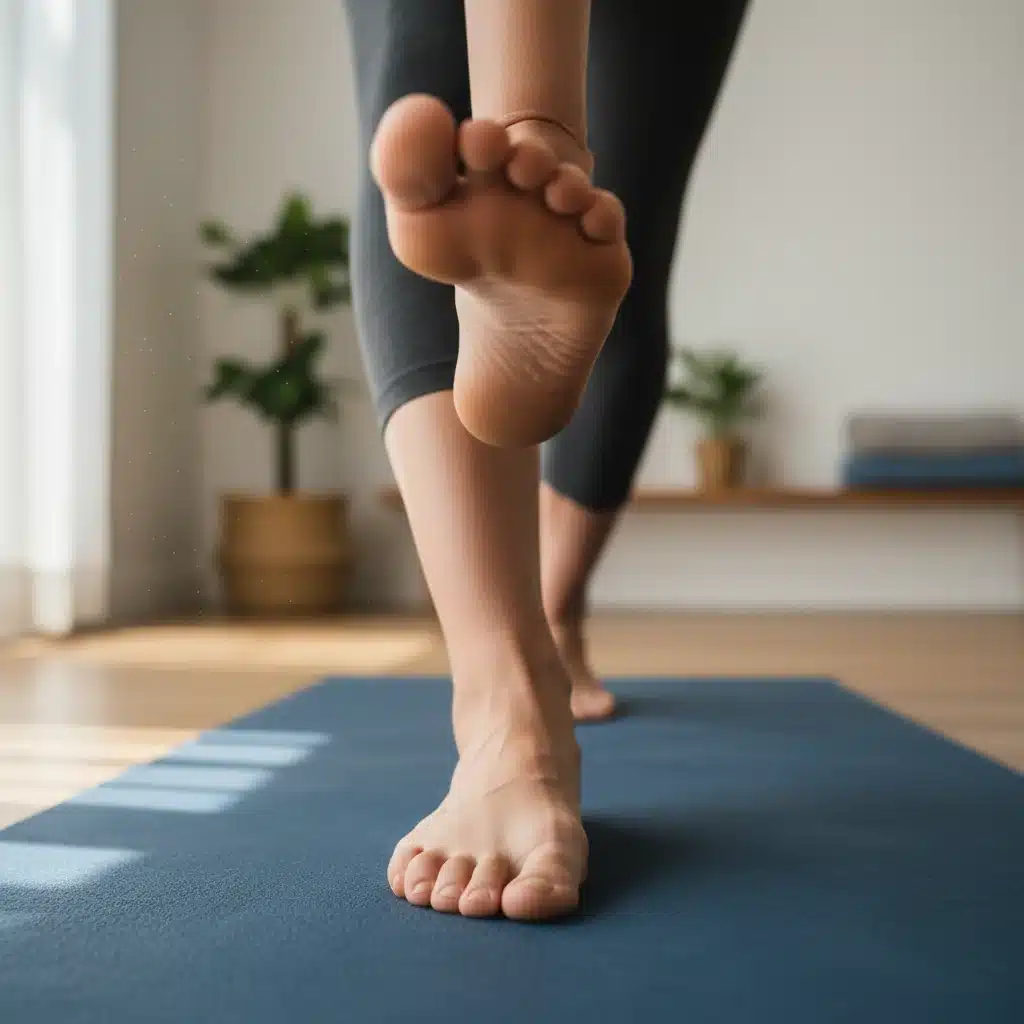
- Standing Hand-to-Big-Toe Pose (Utthita Hasta Padangusthasana): Excellent for hamstring flexibility and single-leg balance. Use a strap if you can’t reach your toe.
- Crow Pose (Bakasana – optional): An arm balance that significantly strengthens the core and builds confidence. Only attempt if you feel ready.
- Flow sequences: Practice flowing from Tree Pose to Warrior III, or from Warrior II to Half Moon.
- Daily Practice: 25-30 minutes. Focus on smooth, controlled transitions. If a pose feels too challenging, revert to an easier variation or use support.
Week 4: Refinement, Integration, and Mindful Awareness
The final week of the yoga balance challenge is about refining your practice, integrating all you’ve learned, and deepening your mindful awareness. You should feel significantly more stable and confident. This week also includes time for reflection and celebrating your progress.
- Daily Focus: Deepening awareness, subtle adjustments, self-compassion, sustained focus.
- Key Poses: Revisit all poses from previous weeks, focusing on alignment, breath, and holding for longer periods with ease. Experiment with closing your eyes briefly in simpler balance poses like Tree Pose (if safe).
- Daily Practice: 30 minutes. Dedicate time to a longer warm-up and cool-down. Challenge yourself with longer holds and smoother transitions. Incorporate a longer meditation or mindful breathing session.
Essential Tips for Success in Your Yoga Balance Challenge
To maximize your progress and ensure a safe and effective yoga balance challenge, keep these tips in mind:
1. Listen to Your Body
Yoga is not about pushing through pain. If something hurts, back off. There’s a difference between muscle engagement and pain. Always prioritize safety over depth in a pose. Modifications are your friends! Use props like blocks, straps, or a wall to support you as needed. The goal is to build strength and balance gradually, not to achieve a perfect pose on day one.
2. Find Your Drishti (Gazing Point)
A drishti is a steady, unfocused gaze point that helps calm the mind and stabilize the body during balance poses. Choose a fixed point in front of you, ideally at eye level, and soften your gaze. Avoid looking at your moving limbs or other distractions. This simple technique can dramatically improve your ability to hold a balance pose.
3. Engage Your Core
Your core muscles (abdominals, obliques, and lower back) are the foundation of all balance. Actively draw your navel towards your spine and engage your pelvic floor. This creates a stable center from which all other movements can originate. Think of your core as a strong anchor.
4. Breathe Deeply and Steadily
When we struggle with balance, our breath often becomes shallow and erratic. Consciously focus on deep, even breaths (Ujjayi breath, if you’re familiar with it). Your breath acts as a rhythm and a stabilizer. A steady breath calms the nervous system, allowing for greater focus and control.
5. Practice Consistency Over Perfection
It’s better to do 10-15 minutes of yoga every day than one long, intense session once a week. Consistency builds muscle memory and strengthens neural pathways. Don’t get discouraged if some days feel harder than others; that’s perfectly normal. Show up, do what you can, and celebrate the effort.
6. Use Props and Modifications
Blocks, straps, chairs, and even a wall are invaluable tools for beginners and experienced practitioners alike. A block under your hand in Half Moon Pose, a strap around your foot in Standing Hand-to-Big-Toe, or a wall for support in Tree Pose can help you find proper alignment, build strength safely, and prevent injury. Don’t view props as a sign of weakness; they are tools for growth.
7. Incorporate Mindfulness
Beyond the physical postures, bring a mindful awareness to your practice. Notice the sensations in your body, the flow of your breath, and the chatter of your mind. Yoga is a moving meditation. The more present you are, the deeper your connection to your body’s subtle balance cues will become.
8. Stay Hydrated and Nourished
Proper hydration and nutrition support muscle function, energy levels, and overall well-being, all of which contribute to a more effective yoga practice and improved balance. Fuel your body with wholesome foods to support your efforts in this yoga balance challenge.
9. Celebrate Small Victories
Notice the subtle improvements. Maybe you held Tree Pose for an extra second, or you felt more stable walking downstairs. Acknowledge these small wins. They add up to significant progress and keep you motivated throughout the yoga balance challenge.
Beyond the 30 Days: Maintaining and Further Improving Your Balance
Completing this yoga balance challenge is a fantastic achievement, but it’s just the beginning. Balance, like any skill, requires ongoing practice to maintain and further enhance. Here’s how you can integrate what you’ve learned into your long-term routine and continue to challenge yourself.
Make it a Habit
The most crucial step is to continue practicing regularly. Even 10-15 minutes of balance-focused yoga a few times a week can make a huge difference. Consider incorporating a few balance poses into your morning routine or as a break during your workday. Consistency is the true secret to lasting improvement in your yoga balance challenge and beyond.
Explore New Poses and Variations
Once you’ve mastered the poses in this challenge, explore more advanced balance postures. Examples include:
- Handstand (Adho Mukha Vrksasana): Requires immense core and arm strength, and a strong sense of inversion balance.
- Forearm Stand (Pincha Mayurasana): Similar to handstand but on forearms, great for shoulder stability.
- Pistol Squat: A challenging single-leg squat that builds incredible leg strength and balance.
- Walking on uneven surfaces: Practice walking barefoot on grass, sand, or a balance beam to challenge your proprioception.
Always approach new poses with caution, using proper guidance from an experienced instructor if possible.
Incorporate Other Balance-Enhancing Activities
Yoga is powerful, but other activities can also complement your balance training:
- Tai Chi: Known for its slow, deliberate movements and focus on weight shifting, Tai Chi is excellent for balance.
- Pilates: Emphasizes core strength and controlled movements, directly benefiting balance.
- Dancing: Any form of dance, especially ballet or contemporary, significantly improves coordination and balance.
- Sports: Activities like surfing, snowboarding, or even cycling demand and build excellent balance.
Mindful Movement in Daily Life
Bring the principles of your yoga balance challenge into your everyday activities. When you walk, notice how your weight shifts from one foot to the other. When you stand, feel your feet grounding. Can you brush your teeth on one leg? Or pick something up from the floor with mindful control? These small, conscious efforts reinforce your balance skills throughout the day.
Re-evaluate and Set New Goals
Every few months, re-test your baseline using the single-leg and tandem stand tests. This will allow you to track your ongoing progress and set new, challenging goals. Perhaps your next goal is to hold a specific pose for twice as long, or to master a new inversion. Continuous learning and goal-setting keep your practice fresh and engaging.
Seek Expert Guidance
Consider taking a few in-person yoga classes or working with a certified yoga instructor. They can provide personalized feedback on your alignment, offer modifications, and help you safely advance your practice. This can be particularly beneficial as you move into more complex balance poses.
Conclusion: Your Journey to Enhanced Stability in 2026 and Beyond
Congratulations on taking the first step towards a more balanced and centered you! This yoga balance challenge is more than just a series of exercises; it’s an invitation to cultivate a deeper connection with your body and mind. By committing to 30 days of consistent practice, you’ve laid a solid foundation for improved physical stability, mental clarity, and overall well-being. We are confident that by following this guide, you will not only achieve but likely surpass your goal of boosting your balance by 10% by 2026.
Remember that the journey of balance is continuous. There will be days when you feel strong and steady, and days when you feel wobbly. Embrace both with compassion and curiosity. Each practice is an opportunity to learn, grow, and refine your connection to your inner equilibrium. The strength, focus, and resilience you build on your yoga mat will undoubtedly spill over into all aspects of your life, empowering you to navigate challenges with greater grace and stability.
So, roll out your mat, take a deep breath, and step into this transformative yoga balance challenge. Your body and mind will thank you for it. Here’s to a more balanced, confident, and grounded 2026!