Revitalize Your Workday: 6 Micro-Movement Breaks for Office Workers

In the relentless march of 2026, where digital interfaces dominate our professional lives, the modern office worker finds themselves increasingly tethered to a desk. This sedentary lifestyle, while efficient for certain tasks, poses significant challenges to our physical well-being, particularly concerning posture. The long hours spent hunched over keyboards and staring at screens can lead to a litany of musculoskeletal issues, ranging from nagging back pain and stiff necks to more chronic conditions. However, the solution doesn’t always lie in drastic lifestyle overhauls or expensive ergonomic equipment. Sometimes, the most profound changes come from the smallest adjustments. This article delves into the transformative power of micro-movement breaks, offering six essential exercises tailored for office worker posture improvement in 2026. These aren’t strenuous workouts; rather, they are subtle, quick, and highly effective movements designed to be seamlessly integrated into your workday, providing much-needed relief and fostering a healthier, more active existence even amidst the most demanding schedules.
The concept of micro-movement breaks is rooted in the understanding that our bodies are designed for movement, not prolonged stillness. Even short bursts of activity can counteract the negative effects of sitting, stimulating circulation, reducing muscle stiffness, and improving overall physical and mental alertness. For the contemporary office worker, these breaks are not a luxury but a necessity, a proactive measure against the insidious creep of poor posture and its associated ailments. By incorporating these simple yet powerful movements, you can significantly mitigate the risks of a sedentary lifestyle, enhance your comfort, and ultimately boost your productivity and well-being. Let’s explore how these targeted micro-movements can revolutionize your daily routine and help you maintain optimal office worker posture.
The Silent Epidemic of Poor Office Worker Posture
Before we dive into the solutions, it’s crucial to understand the scope of the problem. Poor office worker posture is not merely an aesthetic concern; it’s a pervasive health issue with far-reaching consequences. The human body, when subjected to prolonged static positions, begins to adapt in ways that are detrimental to its natural alignment. Muscles shorten and tighten in some areas, while others become elongated and weak. This imbalance often manifests as a rounded upper back, forward head posture, and an anterior pelvic tilt. The consequences are manifold: chronic pain in the neck, shoulders, and lower back; headaches; reduced lung capacity; digestive issues; and even impaired circulation. The cumulative effect of these issues can significantly diminish an individual’s quality of life and productivity.
Furthermore, the rise of remote work and hybrid models in 2026 has, in some cases, exacerbated the problem. While offering flexibility, working from home often means less-than-ideal ergonomic setups, leading to even greater strain on the body. Kitchen tables become makeshift desks, couches become office chairs, and the lines between work and personal life blur, leading to longer periods of uninterrupted sitting. This makes the implementation of intentional movement even more critical. Addressing poor office worker posture isn’t just about comfort; it’s about safeguarding long-term health and maintaining a functional, pain-free body.
Understanding the Mechanics of Posture Degradation
To effectively combat poor office worker posture, we must first grasp the underlying mechanics of its degradation. When we sit for extended periods, several key muscle groups are placed under constant strain or become inactive. The hip flexors, for instance, remain in a shortened position, leading to tightness that can pull on the lower back and contribute to an anterior pelvic tilt. The chest muscles (pectorals) can become tight, pulling the shoulders forward and contributing to a rounded upper back. Conversely, the muscles of the upper back and glutes, which are crucial for maintaining an upright posture, often become weak and disengaged due to underuse.
The neck and shoulders are particularly vulnerable. Constantly craning your neck forward to view a screen (the dreaded ‘tech neck’) puts immense pressure on the cervical spine, leading to headaches, neck pain, and stiffness. The trapezius muscles, which support the head and neck, become overworked and tense. This cascade of muscular imbalances creates a vicious cycle where poor posture begets more poor posture, making it increasingly difficult to return to a neutral, healthy alignment. Micro-movement breaks are designed to interrupt this cycle, re-engage dormant muscles, and release tension in overworked ones, thereby restoring balance and improving office worker posture.
The Power of Micro-Movements: Why Small Actions Yield Big Results
The beauty of micro-movement breaks lies in their simplicity and accessibility. You don’t need a gym membership, special equipment, or even significant time away from your desk. These are movements that can be performed discreetly, often in under a minute, yet their cumulative effect over a workday is profound. By regularly interrupting periods of static sitting, you send signals to your body that movement is still a priority. This helps to maintain muscle elasticity, improve blood flow, and keep your joints lubricated. Think of it as hitting a ‘reset’ button for your body every hour or so.
Moreover, micro-movements aren’t just physical; they have a significant cognitive benefit too. Stepping away, even for a moment, can break the concentration fatigue that often sets in during long work sessions. It allows for a mental refresh, often leading to improved focus and problem-solving abilities upon returning to your task. This holistic approach makes micro-movement breaks an indispensable tool for enhancing both physical health and productivity for any office worker posture conscious individual.
The key to success with micro-movements is consistency. It’s not about how intensely you move, but how often. Setting reminders, perhaps every 30-60 minutes, can be incredibly effective. Even a few seconds of intentional movement can make a difference in preventing the stiffness and discomfort that accumulate throughout the day. Let’s explore six highly effective micro-movement breaks that every office worker should integrate into their 2026 routine to dramatically improve their posture and overall well-being.
6 Essential Micro-Movement Breaks for Optimal Office Worker Posture in 2026
These exercises are designed to target common areas of tension and weakness caused by prolonged sitting. Perform each movement gently, focusing on proper form and listening to your body. Remember, the goal is to alleviate tension, not create more.
1. The Thoracic Spine Extension and Rotation (The ‘Desk Decompressor’)
The thoracic spine, or upper back, often becomes rounded and stiff from prolonged sitting. This movement helps to counteract that by promoting extension and rotation, improving overall office worker posture.
- How to Perform: Sit tall at your desk. Place your hands behind your head, fingers interlaced, elbows pointing out. Gently lean back, allowing your upper back to arch slightly over the backrest of your chair. As you extend, gently twist your torso to one side, holding for a few seconds, then return to center. Repeat on the other side.
- Duration: 30-60 seconds, 2-3 repetitions per side.
- Benefits: Increases mobility in the upper back, counteracts rounded shoulders, and opens the chest.
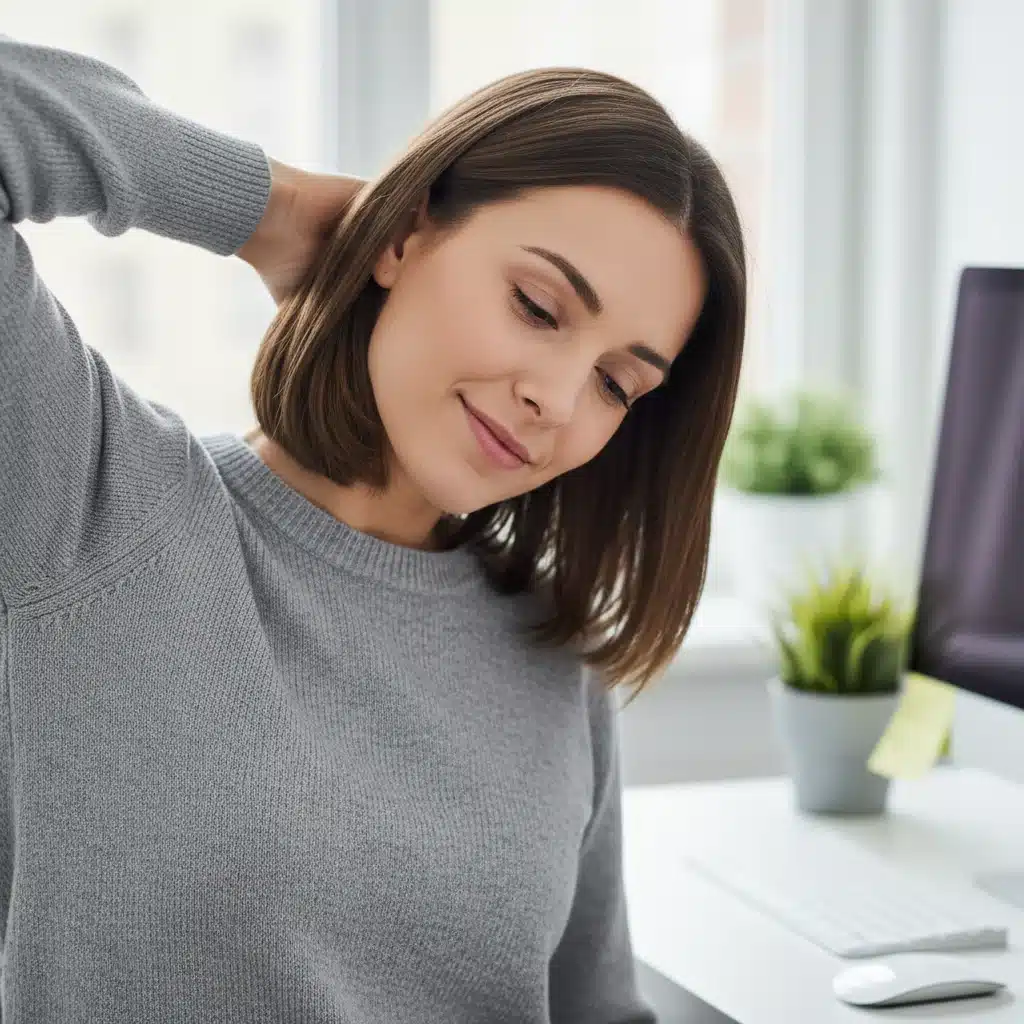
2. Neck and Shoulder Release (The ‘Tech Neck Terminator’)
This micro-movement directly addresses the tension that builds in the neck and shoulders due to forward head posture and stress, a common issue for office worker posture.
- How to Perform: Sit or stand with a straight spine. Gently drop your right ear towards your right shoulder, feeling a stretch along the left side of your neck. Hold for 10-15 seconds. Repeat on the other side. Then, gently roll your shoulders back and down in a circular motion, performing 5-10 repetitions.
- Duration: 1 minute.
- Benefits: Relieves neck stiffness, reduces tension headaches, and improves shoulder mobility.
3. Hip Flexor Stretch (The ‘Chair Conqueror’)
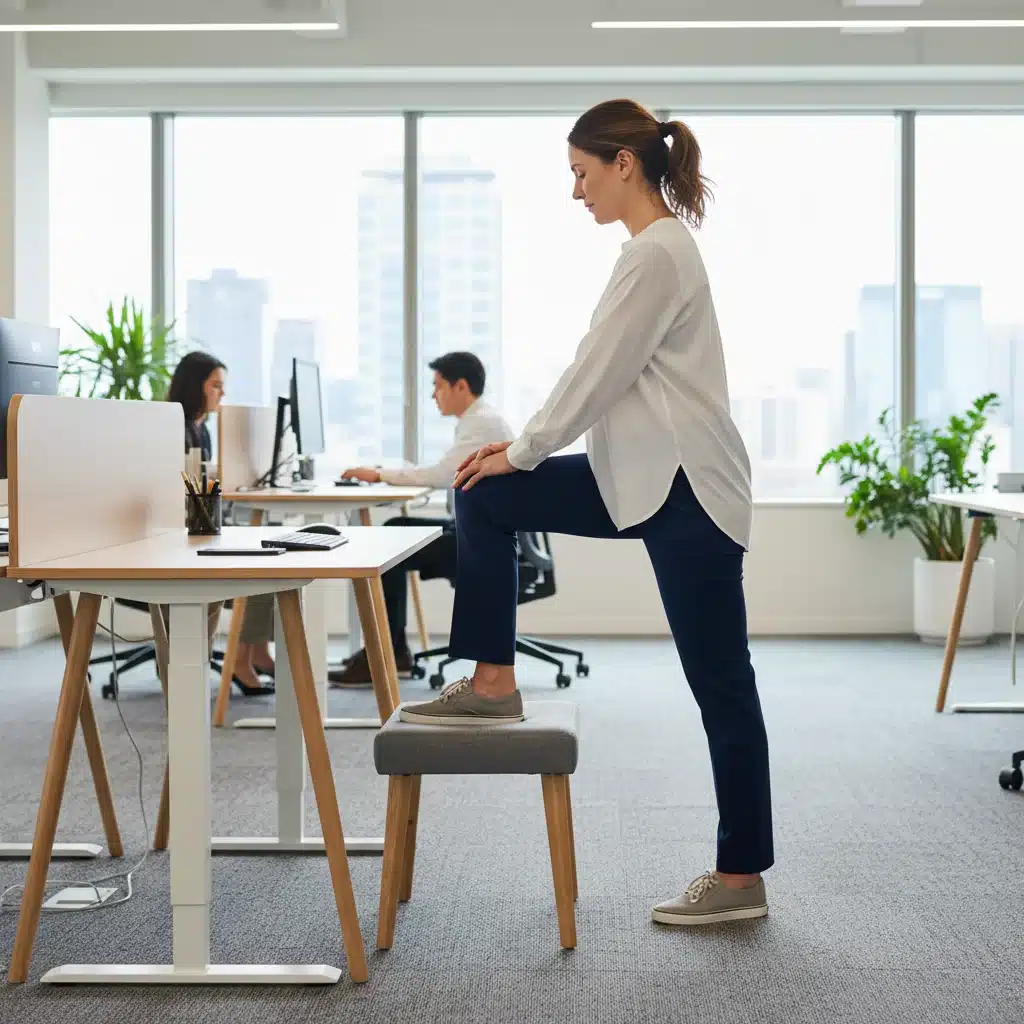
Tight hip flexors are a hallmark of prolonged sitting. This stretch helps to lengthen them, taking pressure off your lower back and improving your overall office worker posture.
- How to Perform: Stand up from your desk. Step one foot forward into a slight lunge position, keeping your back leg straight and heel lifted. Gently push your hips forward until you feel a stretch in the front of your back hip. You can hold onto your desk for balance. Hold for 20-30 seconds per side.
- Duration: 1-2 minutes.
- Benefits: Alleviates lower back pain, improves hip mobility, and promotes a more neutral pelvic alignment.
4. Scapular Squeezes (The ‘Posture Power-Up’)
This simple exercise strengthens the muscles between your shoulder blades, which are crucial for pulling your shoulders back and maintaining an upright office worker posture.
- How to Perform: Sit or stand tall. Gently squeeze your shoulder blades together as if you’re trying to hold a pencil between them. Keep your shoulders down and relaxed, not shrugging. Hold the squeeze for 5-10 seconds, then release.
- Duration: 30-60 seconds, 5-10 repetitions.
- Benefits: Strengthens upper back muscles, reduces rounded shoulders, and promotes better spinal alignment.
5. Ankle Circles and Calf Stretches (The ‘Circulation Creator’)
While often overlooked, leg and ankle mobility are vital for overall comfort and circulation, which indirectly supports good office worker posture by reducing stiffness in the lower body.
- How to Perform: While seated, lift one foot slightly off the floor. Rotate your ankle clockwise for 10 circles, then counter-clockwise for 10 circles. Repeat with the other foot. Then, stand up and place your hands on your desk. Step one foot back, keeping the heel on the floor and the leg straight. Lean forward to feel a stretch in your calf. Hold for 20-30 seconds per side.
- Duration: 1-2 minutes.
- Benefits: Improves circulation in the lower legs, reduces ankle stiffness, and stretches the calves, which can impact gait and overall lower body alignment.
6. Standing Desk Marching (The ‘Dynamic De-Stressor’)
If you have access to a standing desk, this is an excellent way to introduce dynamic movement and improve your office worker posture while working.
- How to Perform: While at your standing desk, gently march in place, lifting your knees slightly. You don’t need to lift them high; the goal is just to shift your weight and activate different leg muscles. You can also incorporate gentle side steps or sway slightly from side to side.
- Duration: 1-2 minutes, performed periodically throughout standing sessions.
- Benefits: Improves circulation, engages core muscles, reduces static standing fatigue, and promotes active engagement of the lower body.
Integrating Micro-Movements into Your Daily Routine
The true power of these micro-movement breaks lies in their consistent application. Here are some strategies to help you seamlessly integrate them into your 2026 workday, ensuring sustained improvement in office worker posture:
- Set Reminders: Use a timer, an app, or even your calendar to remind you to take a 1-2 minute break every 30-60 minutes. Consistency is key.
- Batch Movements: Don’t feel pressured to do all six at once. Pick 2-3 movements to focus on for a week, then rotate or add others.
- Link to Existing Habits: Pair a micro-movement with an existing desk habit. For example, every time you finish a call, do a neck and shoulder release. Every time you refill your water bottle, do a hip flexor stretch.
- Standing Desk Integration: If you use a standing desk, alternate between sitting and standing, and incorporate dynamic movements like the standing desk march during your standing periods.
- Educate Your Colleagues: Share these tips with your team. A collective effort can create a more supportive and health-conscious work environment.
- Listen to Your Body: Pay attention to where you feel tension building. This can guide you to which micro-movements are most beneficial for you at any given time.
Beyond the Desk: Complementary Habits for Superior Office Worker Posture
While micro-movements are incredibly effective, they are part of a larger ecosystem of wellness. To truly optimize your office worker posture and overall health, consider these complementary habits:
Ergonomic Setup
Ensure your workstation is set up ergonomically. Your monitor should be at eye level, your feet flat on the floor or a footrest, and your keyboard and mouse within easy reach. A good ergonomic chair provides lumbar support. Even small adjustments can make a big difference in reducing strain and promoting better posture.
Regular Hydration
Staying well-hydrated is crucial for joint health and muscle function. Dehydrated muscles are more prone to stiffness and cramping. Keep a water bottle at your desk and sip throughout the day. This also encourages more frequent trips to the water cooler or restroom, naturally incorporating more movement.
Mindful Movement Outside Work Hours
Don’t let your only movement be at the desk. Engage in regular physical activity outside of work. Whether it’s walking, yoga, swimming, or strength training, consistent exercise helps to strengthen core muscles, improve flexibility, and maintain overall body alignment. Yoga and Pilates, in particular, are excellent for improving body awareness and office worker posture.
Stress Management
Stress often manifests physically, leading to tension in the neck, shoulders, and back. Incorporate stress-reducing practices into your daily life, such as meditation, deep breathing exercises, or spending time in nature. Reducing stress can directly alleviate muscle tension that negatively impacts posture.
Adequate Sleep
Quality sleep allows your body to repair and rejuvenate. When you’re well-rested, your muscles are less prone to fatigue and more capable of holding proper alignment. Aim for 7-9 hours of uninterrupted sleep each night.
The Future of Office Worker Posture in 2026 and Beyond
As technology continues to evolve, so too will our work environments. The trend towards greater awareness of workplace wellness is encouraging, with more companies investing in ergonomic solutions and promoting healthy habits. However, personal responsibility remains paramount. Each office worker posture journey is unique, and empowering oneself with the knowledge and tools to maintain physical health is crucial.
The micro-movement breaks outlined in this article are not just temporary fixes; they are sustainable habits that, when consistently practiced, can lead to long-term improvements in posture, pain reduction, and overall well-being. By embracing these small, intentional movements, the modern office worker can transform their relationship with their desk, turning a potential source of discomfort into an opportunity for sustained health and vitality. Make 2026 the year you prioritize your office worker posture and unlock a more comfortable, productive, and pain-free professional life.
Remember, your body is your most valuable asset. Invest in its well-being with these simple yet powerful micro-movement breaks. Start today, and feel the difference!